

*Worth hearing
**Recommended
***Essential listening
CHORAL CDs
**
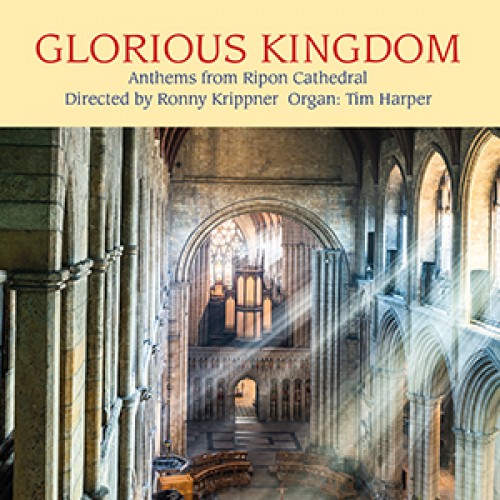
GLORIOUS KINGDOM: ANTHEMS FROM RIPON CATHEDRAL
Choir of Ripon Cathedral / Tim Harper (organ) / Ronny Krippner ♦ Priory PRCD1255
The quality of performance and recording is evident from the start of the first track. Tim Harper’s stirring organ introduction to Harwood’s O how glorious is the Kingdom, with an exciting crescendo into the opening attack by the choir, is captured with clarity and warmth. The coda is beautifully controlled, and lingers in the air before the start of track 2, the Parsons Ave Maria.
Stanford’s For lo I raise up and Bairstow’s Blessed City, heavenly Salem are the other big works. These large-scale early-20th-century pieces seem particularly suited for the Harrison & Harrison organ, the singers and acoustic. The Stanford is one of four tracks that benefit from the full choral forces; most of the other pieces are sung either by boy choristers or by girl choristers, with the lay clerks. Living composers are represented by the cathedral’s own music team with Tim Harper’s Loquebantur variis linguis (a chance to hear the lay clerks alone) and Ronny Krippner’s Three in One. The remaining 14 tracks contain some of the most popular pieces in the cathedral repertoire, intelligently ordered and well performed.
**
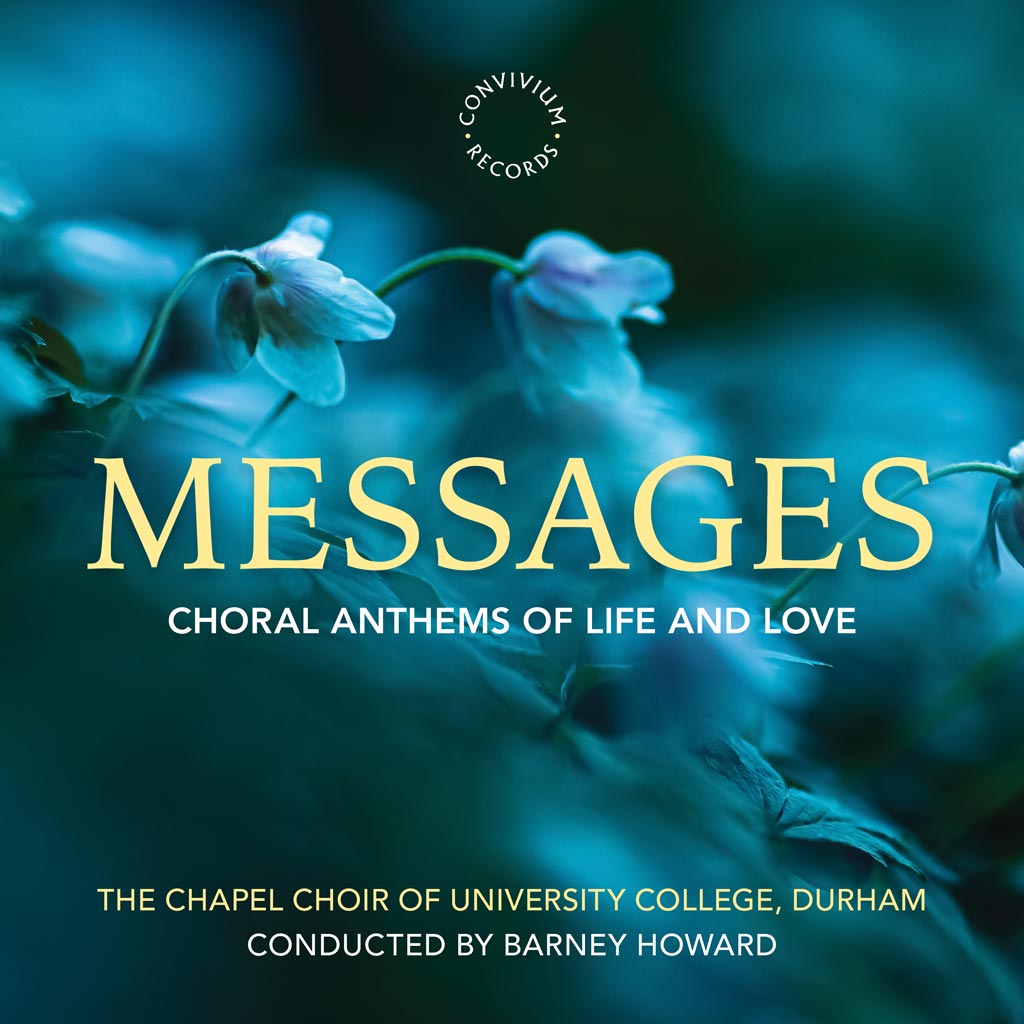
MESSAGES: CHORAL ANTHEMS OF LIFE AND LOVE
Chapel Choir of University College, Durham / Alan Erdelyi and Henry Hiscock (organ) / Barney Howard ♦ Convivium Records CR122
The title piece, Messages by Ben Rowarth, sits at the centre of this unusually structured disc. The text of the piece comprises messages written by friends of the journalist David Knowles after his death at the age of 32. David read theology at Durham, where he sang in the chapel choir, later in the choir of the Anglican church in Geneva and then, back in London as a journalist, in the choir of St Bartholomew the Great. Rowarth’s music starts on a single note, growing out of nothing and gradually increasing in complexity as it allows the ‘messages’ about David to be heard. There follow eight anthems by Edward Bairstow and Francis Jackson: composers normally associated with York Minster, but who both received their doctorates from Durham, while Bairstow went on to become to become professor of music there.
At the start are two mournful Purcell anthems, Hear my prayer, O Lord and Remember not, Lord, our offences followed by the first complete recording of Amy Beach’s Four Canticles Op.78. This broadens the appeal of the disc far beyond its Durham connection. Beach wrote the pieces in 1916, setting parts of Psalms 92, 67, 98 and 103. Each canticle lasts over five minutes. They are difficult, and some passages stretch the young singers, but there is commitment and enthusiasm in the singing, and especially in the music’s many joyful expressions of praise and thanksgiving.
Judith Markwith
*
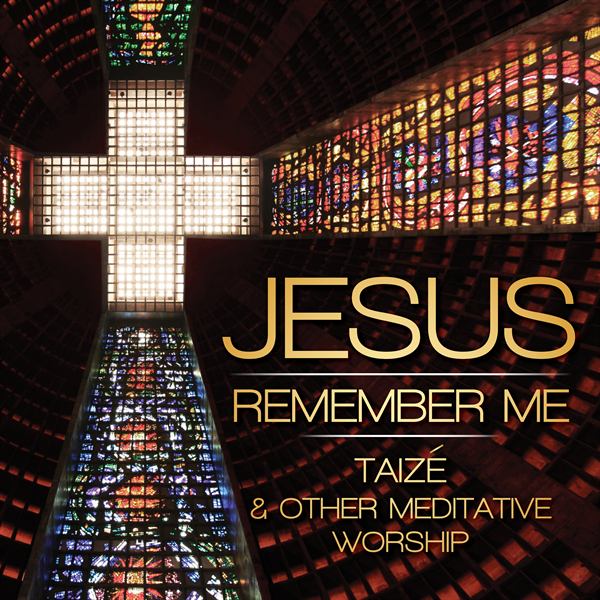
JESUS, REMEMBER ME: TAIZÉ & OTHER MEDITATIVE WORSHIP (i)
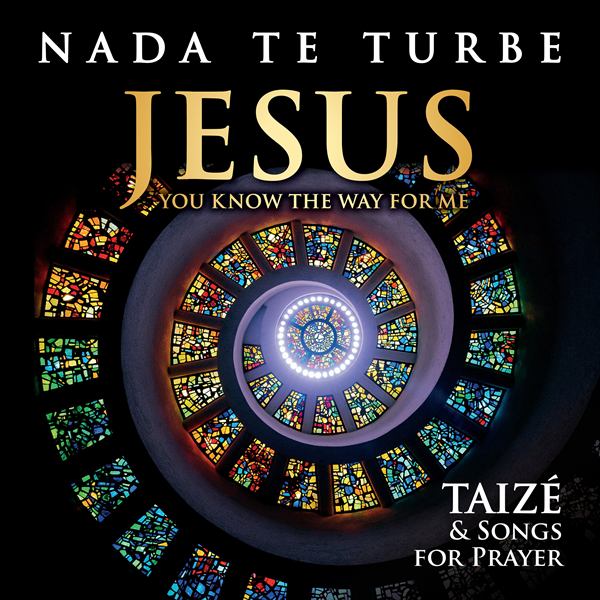
NADA TE TURBE: TAIZÉ & SONGS FOR PRAYER (ii)
The London Fox Taizé Choir / The London Fox Players / Paul Leddington Wright (i) and Roger Wilcock (ii) ♦ Classic Fox Records CFR1375 & CFR2500 (each a 2-CD set)
The first of these double CD sets appeared in 2014, the second in 2026. Each pair of CDs contains 25 tracks, of which 12 appear to be original Taizé songs; 13 are ‘in the style of Taizé’, with scores available on the Fox Records website. The first CD was directed by Paul Leddington Wright and has a classical feel about it. The second is directed by Roger Wilcock with more of a praise and worship feel. Taizé devotees who want the original and also more in a similar style will welcome these CDs and scores.
Julian Elloway
ORGAN CDs
***
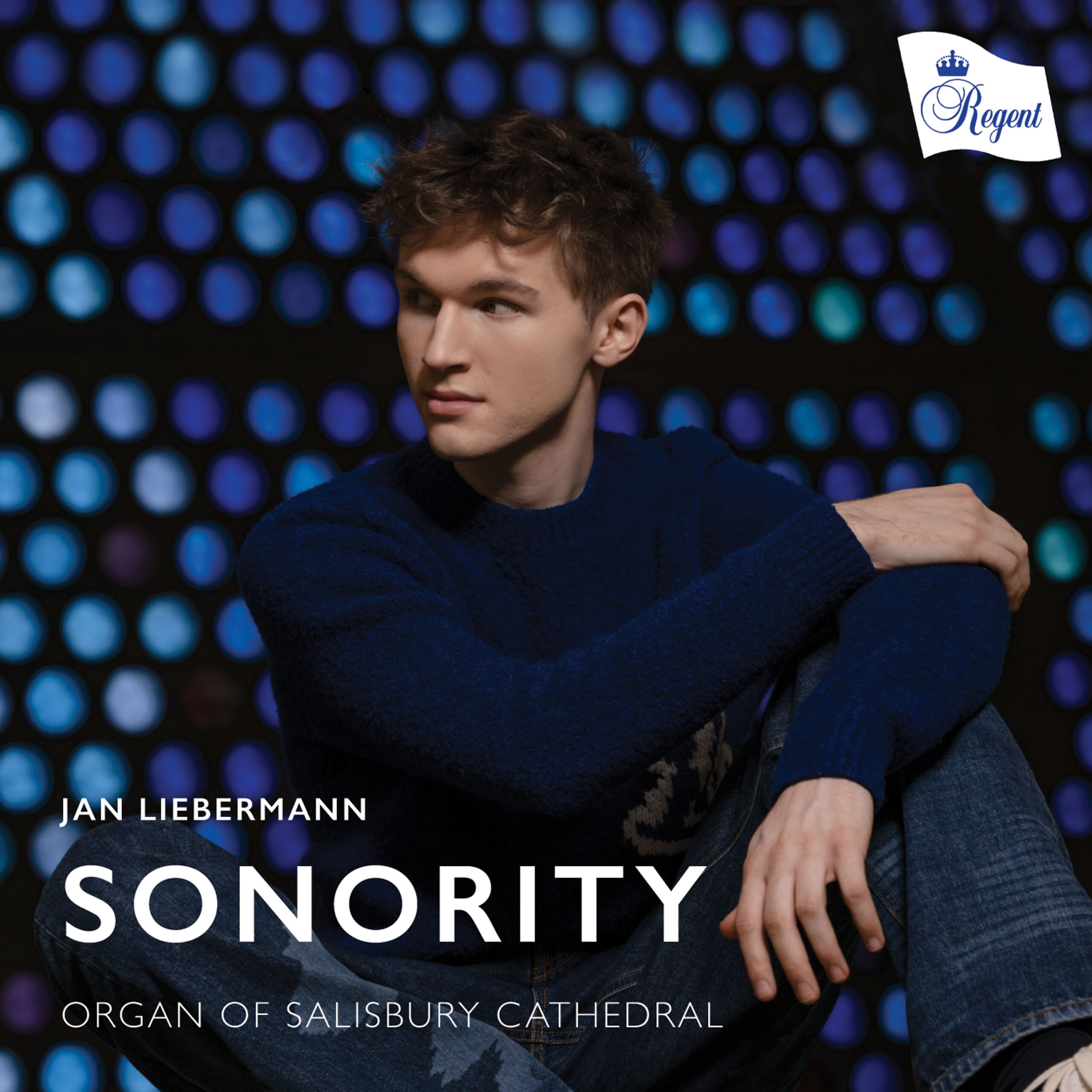
SONORITY
Jan Liebermann plays the organ of Salisbury Cathedral ♦ Regent REGCD601
This is a thrilling debut organ recital from 19-year-old German organist Jan Liebermann, recorded on Salisbury Cathedral’s 150-year-old ‘Father’ Willis organ, recently restored by Harrison and Harrison. From the opening Concert Overture No.3 by Alfred Hollins to the final Toccata from Duruflé’s Suite Op. 5 (which must be among the most difficult pieces in the repertoire), Liebermann’s virtuosity and control of the instrument are manifest. The word ‘brilliance’ can be applied to the playing and to the sound of the instrument. In between are firstly the three Préludes et Fugues Op. 36 by Marcel Dupré, where what can be dense counterpoint is projected with clarity and a mature sense of direction. Karg-Elert’s arrangement of Bach’s ‘Air on the G string’ provides warmth and tranquillity before the ‘Moto Ostinato’ from Petr Eben’s Sunday Music, played with rhythmic energy and drive. The three movements of Duruflé’s Suite conclude a CD that I cannot recommend too highly.
**
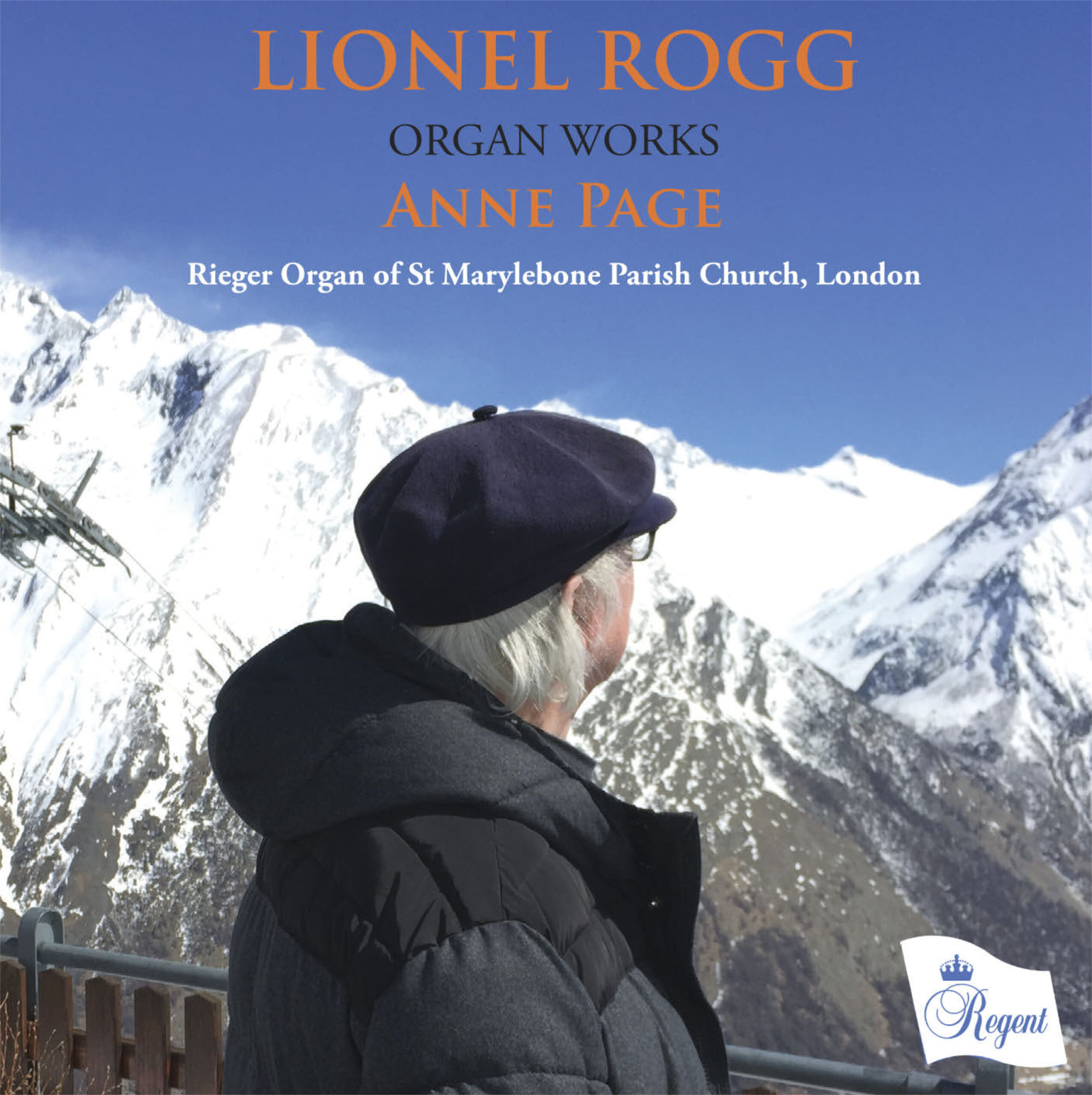
LIONEL ROGG: ORGAN WORKS
Anne Page plays the Rieger organ of St Marylebone Parish Church ♦ Regent REGCD598
This disc celebrates the 90th birthday of the Swiss organist Lionel Rogg, who made his name with performances of the organ music of J.S. Bach (of which he also made three complete recordings). It opens and closes with toccatas, of which the opening jazz-inflenced Toccata ritmica of 1988 is the earliest piece recorded here. Towards the midpoint of the CD are nine tracks with the 2024 revision of Neuf pieces brèves, pieces that are short individually but as a sequence take 23 minutes. They are stylistically diverse, with character often shown in their titles such as Pastorale, Berceuse, Ground, Petit dialogue chromatique, Méditation and, to finish, a setting of a Passiontide chorale. A five-movement treatment of Pange lingua, followed by a single-movement Fantasie sur Felix namque, treat their plainsong themes in the tradition of the classical French organ school but using the language of a 21st-century composer. Rogg turns to Japan for Yorokobi – Pièce Joyeuse and a Hommage à Takemitsu. The latter has four movements depicting the elements of earth, air, fire and water, which form a 20-minute suite full of colour and atmosphere. Anne Page finds an imaginative range of sound colours on the 1987 neoclassical Rieger organ.
Duncan Watkins
DVDs
***
LIGHTEN OUR DARKNESS: ILLUMINATING CHORAL EVENSONG
A film by Steven Benson ♦ Choirs of: New College, Oxford; St John’s College & Trinity College, Cambridge; Birmingham University; Blackburn, Chester, Guildford, Lincoln, Salisbury, Truro & Winchester Cathedrals; Bolton Abbey; Rugby School; Methodist College, Belfast; Roden Girl Choristers of Groningen, the Netherlands; Boys’ Choir of St Mark’s School of Texas, USA ♦ Fugue State Films FSFDVD019
Two DVDs with a duration of nearly five hours present a detailed documentary and musical exploration of the history and culture of Anglican choral evensong. The scope of the project is seen in the range of locations listed above (to which can be added Grantham, Bath, Sheffield and more), and takes us into cathedrals, churches and schools throughout England and Ireland, and with an international dimension. The music filmed includes pieces by Tallis, Byrd, Gibbons, Purcell, Stainer, Parry, Stanford, Noble, Howells and Britten, along with such living composers as John Rutter, Bob Chilcott, Hugh Morris, Philip Stopford, Sietze de Vries, Joanna Forbes L'Estrange and Alexander L'Estrange. The recording is in 5.1 surround sound, which helps reproduce the spatial feel of choir, organ and building, with a stereo option.
The material is organized into three parts, covering its history, structure and continuing significance, with the varied locations and subjects linked in a narration from radio presenter Zeb Soanes. Interviews and commentaries, including by John Rutter, Katherine Dienes-Williams, Bob Chilcott, David Hill, Jeremy Begbie, Joanna Forbes L'Estrange, Andrew Nethsingha, Elizabeth Stratford and Christopher Gray, help tease out the practical issues, as well as artistic and spiritual ones. People who might like a grittier approach, asking questions about more difficult musical idioms or looking at some of the well-publicized problemsword in keeping the tradition alive in cathedrals in recent years, will not find it here, but as an affectionate explanation and appreciation of cathedral evensong in particular, I cannot imagine the subject being treated better. Lovers of BCP choral evensong will find much to treasure here.
Julian Elloway
BOOKS
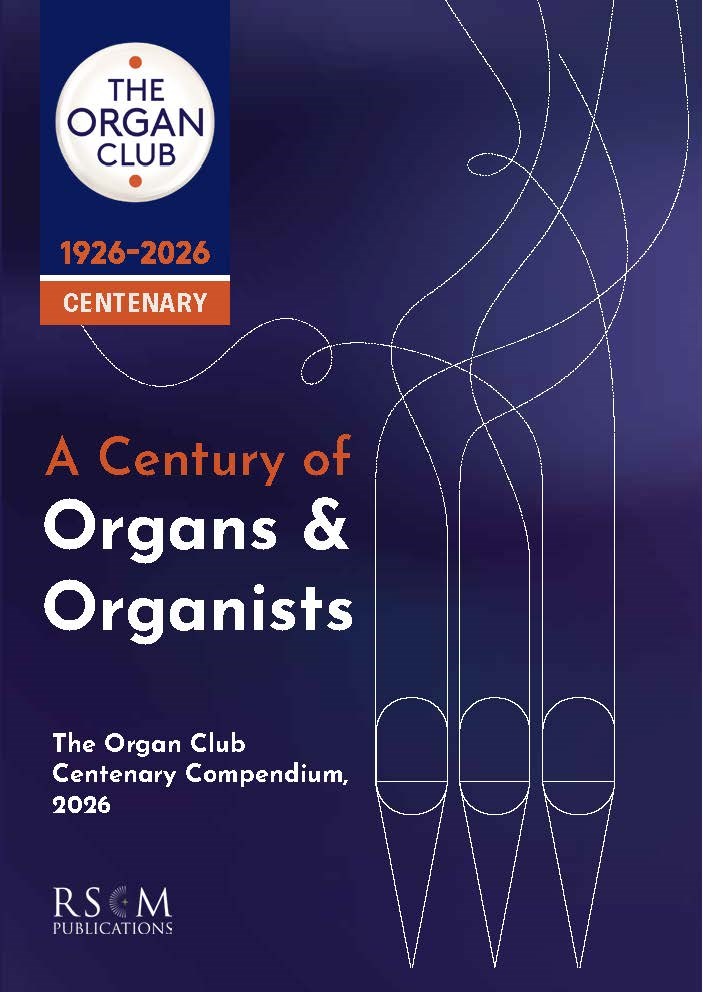
A CENTURY OF ORGANS & ORGANISTS: The Organ Club Centenary Compendium
ed. Paul Hale
RSCM Publications
319pp. HB 978-0-85402-368-4 £25.00
For their centenary year, The Organ Club has published a commemorative compendium of historical facts, figures, opinions and musings. Edited by Paul Hale and with a foreword by Dame Gillian Weir, many eminent experts have contributed to the 21 chapters, which include an edited version of an address by the club’s first president, organ builder Henry Willis III (1889–1966).
Founded by a group of organ enthusiasts, The Organ Club still actively pursues its original ideal of promoting ‘public awareness and appreciation of the art and science of the organ, its players and its music’. Its membership is much wider than just professional organists, academics and organ builders. Its activities appeal to a broad church including children and non-musicians who like organ music, as well as organ buffs.
It is hard to pitch a book such as this at technical experts and accomplished players, and also amateur listeners, but Paul Hale has done just that. It is adorned with a vast number of superb photographs, both of people and of instruments. The technically minded will not be disappointed, and neither will those whose interest is more in the historical, church or social aspects of the instrument. I especially encourage RSCM members to read our former RSCM director Andrew Reid’s concise yet questioning chapter ‘Reflections on a century of church music in Britain’, which causes us to be thoughtful about the way ahead for church musicians today.
There are too many subject areas to mention all, but organ recordings, boys’ voices, digital instruments, modern organ music through the century, organ teaching and some notable organs and personae form a magical mosaic of memories and delightful trivia. Amazing production values once more from RSCM Publications and even a dust jacket! At full price you would not find a specialist book like this in any bookshop, and RSCM members also get their usual discount. Highly recommended as Christmas reading!
John Henderson

CHORAL MUSIC
E Easy
M Medium
D Difficult
CHRISTMAS
THE GOLDEN CAROL [M]
Ben Ponniah
SATB with divisions
Boosey & Hawkes BH15185 £2.99
IN THE BLEAK MID-WINTER [E]
Lucy Walker
SATB and organ
Encore Publications 020846 £2.85
What appears to be a straightforward setting of the two verses of the old English Golden Carol, with a gentle triple-time rhythm, is more elaborate in the second verse as the harmonies become more intense (and jazz-influenced) and the texture expands into nine parts for a glorious ‘Star of Christmas morning’.
First published by Encore Publications in Carols of Our Time, Lucy Walker’s setting of In the bleak mid-winter is now available separately. There are just three verses, and each repeats and dwells on the final three syllables: ‘Long ago’, ‘Jesus Christ’ and ‘Give my heart’. The setting is easy to sing and emotionally touching.
THE GREAT CHISHILL MOTETS VOL. 2: ADVENT TO CANDLEMAS [E]
Jamie W. Hall
SAB with optional keyboard
Banks Music Publications GCL047 £3.95
Six short motets range from an Advent Responsory through Christmas and Epiphany to Candlemas (a Nunc Dimittis). Pitches and rhythms are easy, although there is a range of carefully notated dynamics, notably in O nata lux with a fortissimo climax on ‘clemens supplicum’ (it is the one motet with Latin text). The third piece is a Magnificat that shares material with the Nunc Dimittis printed as the final item. In Adam lay ybounden, a swaying 6/8 rhythm contrasts with more emphatic ‘Ne had the apple taken been’ and ‘Deo gracias!’ Gold, Frankincense and Myrrh starts with the magi’s ‘exceeding great joy’ and a string of parallel fifths, becoming more reflective for the three gifts themselves. There is much to admire in the variety of textures, voice ranges suitable for everyone, and all the vocal lines having equal importance.
James L. Montgomery
EVENSONG CANTICLES
SAN DIEGO SERVICE [E/M]
Joanna Forbes L’Estrange
SATB and organ
RSCM Publications RES175 £3.50
MAIDA VALE SERVICE [M]
Ben Ponniah
SATB with divisions and organ
RSCM Publications RES173 £3.95
ST MARTIN’S SERVICE [M]
Lucy Walker
SATB and organ
RSCM Publications RES172 £4.50
All three pieces take as their starting point the Magnificat being the Song of Mary. In the San Diego Service, Joanna Forbes L’Estrange opens with a soprano solo ‘with childlike innocence’ and a melody that will recur for both Glorias and in particular ‘as it was in the beginning’. Particularly effective is the repetition of particular words and musical motifs to form an accompaniment, with ‘blessed’ and ‘mercy’ repeated as a sort of ostinato accompanying pattern. The tempo relaxes a little for the central section starting ‘He hath put down the mighty from their seat’, with a new melody that will reappear at the start of the Nunc Dimittis. The Magnificat ends with a triumphant Amen, but the Nunc Dimittis allows a more contemplation as if Simeon is allowed to depart in peace. The organ provides support throughout. Choirs will find this an easy-to-perform and rewarding addition to the repertoire.
Ben Ponniah, in his Maida Vale Service, allows all sopranos to sing the first two sentences, after which altos join and then upper voices split into four parts for ‘he that is mighty’. Tenors and basses enter dramatically at ‘He hath shewed strength’. A unison ‘He hath put down’ is appropriately terrifying, followed by a sweet ‘exalted the humble and meek’. The opening Magnificat melody reappears for ‘He remembering his mercy’. In the Nunc Dimittis, a solo tenor opens as the voice of Simeon. Both Glorias share the same material and end powerfully with some jazz influenced, ‘scrunchy’ chords.
Lucy Walker captures the natural flow of the text in her St Martin’s Service and, despite changes in time signature, sounds traditional in its harmonic language and textures. The writing is warm, whether in the hushed final verses of each canticle, or the subsequent blaze of light beginning each Gloria, announced by a short organ crescendo. But where the first Gloria discards the previous D major to grasp a bright F sharp major, the Gloria at the end of the Nunc Dimittis remains in D major and finishes at rest: in the composer’s words, ‘an expression of homecoming and comfort’.
SAINT PAUL’S SERVICE [E/M]
Malcolm Archer
SATB and organ
Encore Publications 020843 £2.95
PRECES AND RESPONSES, SET 3 [E/M]
Malcolm Archer
SATB
Encore Publications 020841 £2.85
Commissioned by St Paul’s Church in Augusta, Georgia, the service setting is tuneful, right from the start when sopranos duet with an organ Solo Flute. The organ has a perky one-bar motif, which sopranos answer by more or less repeating the second part of the phrase at half speed. This idea dominates the Magnificat, flexibly illustrating the text. As with Ben Ponniah’s setting reviewed above, sopranos have the first two sentences, altos join from ‘For behold’ and full choir from ‘He hath shewed strength’. At the start of the Nunc Dimittis, tenors and basses sing the words of Simeon. The organ is silent for the choir to sing ‘To be a light’, rejoining for a fortissimo ‘and to be the glory’. A reflective statement of the ‘Magnificat motif’ prepares for a resolute restatement of the Gloria.
The Preces and Responses, in the same key as the St Paul’s Service, include a full setting of the Lord’s Prayer. Both these publications demonstrate skill in writing music within the range of most church choirs, and with a sweep of joyful melody.
James L. Montgomery
CHORAL WORKS
REQUIEM [M/D]
Grayston Ives
Tenor solo, SATB and orchestra
Carus-Verlag vocal score 27.325/03 €24.00
The first performance of this Requiem in 2008 marked the 550th anniversary of the foundation of Magdalen College, Oxford. We now have orchestral score, vocal score and chorus score handsomely produced by Carus-Verlag in Germany, with the vocal score supplied for review including a piano reduction of the chamber orchestral accompaniment.
Bell sounds are much in evidence, with tiny Tibetan hand-held cymbals at the beginning and end, and an a cappella Benedictus in which the chorus imitates handbell ringers, ending with ‘in ex-cel-sis’ repeated as if pealing off into the distance – a striking effect. With such an experienced choir director as composer, the vocal writing flows naturally, whether in plainchant-like passages passed from voice to voice or in more violent, rhythmic writing such as the Sanctus or the central part of the final Libera me. The concluding In paradisum has a gently rocking accompaniment over which the choir sings celestially before the high bells announce the conclusion.
Julian Elloway
CREDO: SIX COMPOSERS – SIX PARTS – ONE CHRISTIAN FAITH
Martín Palmeri, Marten Jansson, Keiko Harada, Dominick DiOrio, Victoria Vita Poleva, Grayston Ives
SATB with divisions
Carus-Verlag 7.461/00 €14.40
Marking the 1700th anniversary of the Council of Nicaea, this musical setting of the Nicene creed was commissioned from six different composers from six different countries and representing six different strands of Christianity: a celebration of unity, diversity and solidarity.
Mårten Jansson (Sweden) opens with ‘Credo in unum Deum’ and what appears to be a dense eight-part setting of the opening clauses of the creed, although there is much doubling. Emphasis is placed on the word ‘Credo’ and there are big crescendos. Keiko Harada (Japan) takes over at ‘Et incarnatus est’. Syllables are separately formed and linked as if becoming incarnate, and dissolve into nothing at the mystery of ‘homo factus est’. Grayston Ives (United Kingdom) contributes a pained and solemn ‘Crucifixus’. Victoria Vita Poleva (Ukraine) offers an unexpectedly restrained, almost ritualistic ‘Et resurrexit’ contrasting with Martín Palmeri who introduces some syncopations and also reiterates ‘Credo in unum Deum’ for structural effect. It is left to Dominick DiOrio (USA) to bring the work to a vigorous conclusion with excited, vigorous Amens.
Stephen Patterson
ORGAN MUSIC
E Easy
M Medium
D Difficult
BUXTEHUDE COMPLETE ORGAN WORKS
ORGAN CHORALES
Dieterich Buxtehude
ed. Harald Vogel
Breitkopf & Härtel
Volume III/1 EB9470 €40.90
Volume III/2 EB9471 €40.90
In these two volumes, the sublimely beautiful chorale preludes of Dieterich Buxtehude (1637–1707) are arranged in title order, easy to navigate, with A–L in the first volume and M–W in the second, and an index that covers both. The previous volumes of ‘free organ works’, i.e. compositions not based on chorale melodies, were reviewed four years ago in Sunday by Sunday 101.
The preface is in German and English; the critical report is printed in German but the publisher’s website has the 20-page report in English, covering both volumes, at https://www.breitkopf.com/downloads/EB_9471_KB_en.pdf – a valuable help to understanding the pieces. After a survey of the difference between chorale preludes, chorale variations and larger chorale fantasies (plus chorale toccatas and a chorale ricercar), there is a discussion with music examples of the different uses of two and three staves in the notated sources and the indication of pedal parts. Finally comes a discussion of ornamentation, given how the sources reflect the practice of their 18th-century copyists. I hope that these excellently produced volumes will widen appreciation of the rich variety of Buxtehude’s chorale-based music.
Julian Elloway
SINGLE COMPOSER ANTHOLOGIES
SELECTED WORKS FOR ORGAN [mostly E–M]
June Nixon
Kevin Mayhew 3612663 £18.99
This anthology is a collection of 45 of June Nixon’s organ compositions originally published between 1993 and 2019, plus a single 2025 piece, Adoro te devote. The majority are based on hymn tunes and are short and quite easy. The new Adoro te devote is typical: two pages with manuals elaborating motives taken from the plainchant tune (and introducing some chromaticism), while pedals enter with the complete melody, presented as separate phrases and with a bar or more for the manuals between each phrase. There are nice juxtapositions of compound and simple time, taking their cue from the fluidity of the melody. It is characterful (the character here is shown as ‘amorosamente’), good for use in church services and able to be learnt quickly.
An ‘index by hymn tunes’ includes 23 pieces; some others are also based on pre-existing melodies. Pasticcio, one of the longer pieces, turns out to be a series of seven variations on ‘Auld Lang Syne’, all contrasting in treatment and including an ‘Alla Siciliano’ and a solo pedal ‘Giocoso’. Sometimes the tune name is included in the title but is treated in a way that confounds expectations: Pastiche on ‘Adeste fideles’ is a version of the J.S. Bach ‘Jesu, joy of man’s desiring’ accompaniment, into which is slotted a 12/8 version of ‘O come, all ye faithful’ (and needing some harmonic twisting of the accompaniment). Free compositions include a William Mathias-like Resurrection Fanfare, Llamarada with a Latin American flavour (and marked ‘Giulivo’), A Braule for the Tuba (or whatever) marked ‘Giocondoso’ (an Italian dictionary is useful), and a 25-bar Diversion for the Reeds contrasting with a dignified Pensive Procession. But it is the short pieces based on hymn tunes that will appeal to most purchasers, providing a fund of easy-to-learn repertoire for general service use.
Duncan Watkins
ORGAN WORKS VOLUME 4: POSTLUDES, MARCHES, TOCCATAS AND VOLUNTARIES [M–D]
Denis Bédard
RSCM Publications RO44 £26.25
After three collected volumes (Vol. 1: Two Suites and other works; Vol. 2: Two sets of Variations and other works; Vol. 3: 17 pieces based on hymn tunes) we reach Volume 4 with 16 pieces suitable to be played as final voluntaries. Only five were written as stand-alone items; 11 of the pieces come from larger suites and similar collections, several of which have been reviewed in SbyS. Ian Munro, in December 2023, admired the Suite du troisième ton that provides here a ‘Grand Jeu’, and also Four pieces in jazz style, ‘ideal for a snazzy voluntary or recital programme’, from which we have an exhilarating ‘Ragtime’. ‘Toc-cat-a’ from Cat Suite is particularly appealing, one of several difficult pieces that are worth the effort to learn. This is a useful anthology that I hope will lead purchasers to explore more of Bédard’s organ music.
WILLIAM BOYCE ORGAN ALBUM [E–M]
arr. Martin Setchell
Butz-Verlag 3126 €15.00
For most organists, a William Boyce (1711–79) organ album means his two-stave volume of 10 Voluntaries for organ or harpsichord. For this mostly three-stave volume, Martin Setchell has turned to Boyce’s 8 symphonies and 12 oratorios plus overtures to various odes and masques, and selected 23 movements that work well for organ. Here are gavottes, minuets and a jig, Vivaces, Allegros and Larghettos, a March and a Spirituoso, along with a ‘Symphony’ for The Souls of the Righteous, written for the funeral of George II in 1760. Aside from those last-mentioned movements, the mood is mostly major key and jolly. Players who enjoy the original organ voluntaries will welcome this enlargement of the repertoire.
Julian Elloway
MIXED COMPOSER ANTHOLOGIES
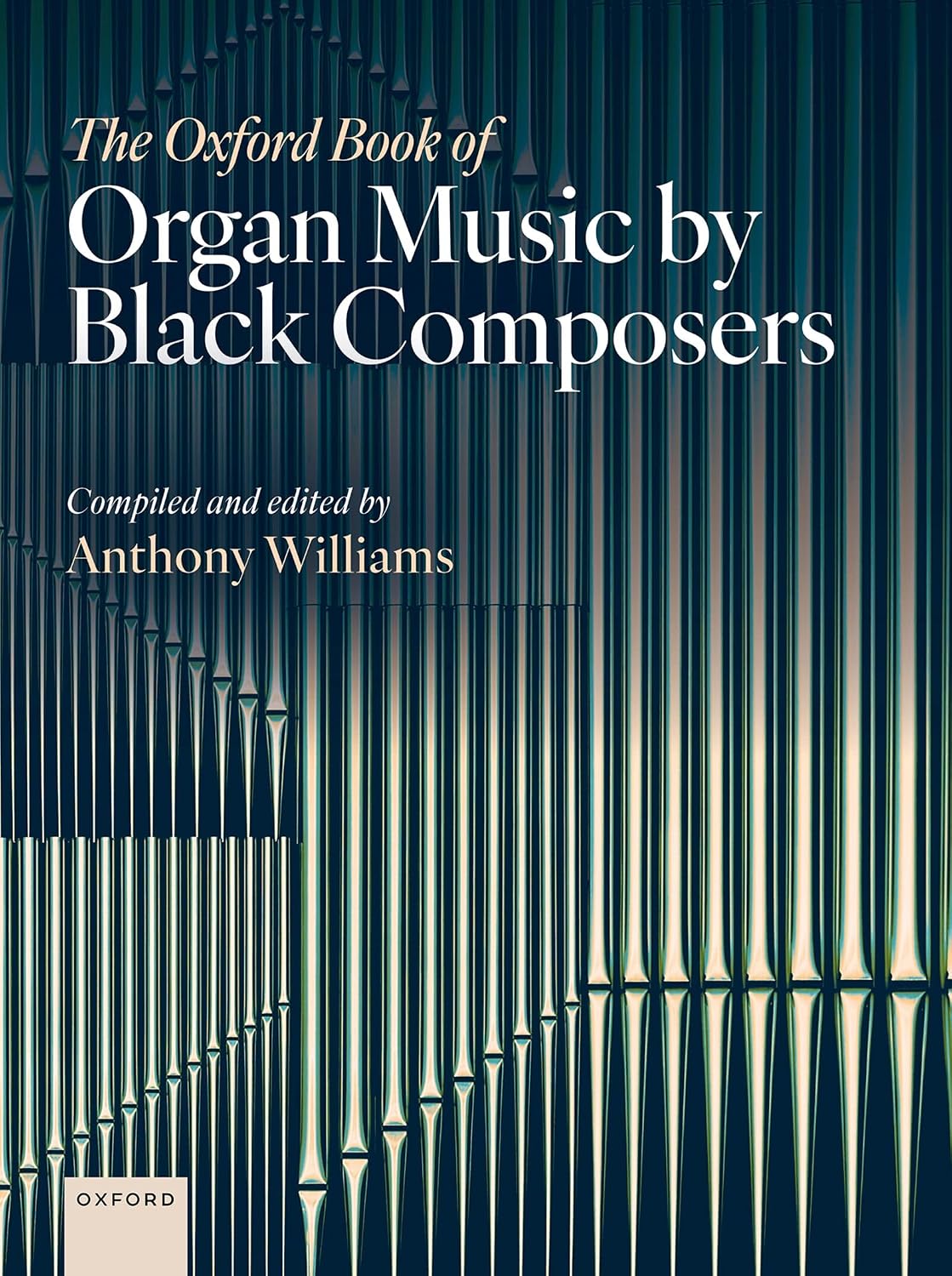
THE OXFORD BOOK OF ORGAN MUSIC BY BLACK COMPOSERS [E–D]
compiled and edited by Anthony Williams
Oxford 978-0-19-357319-2 £29.95
American academic and organist Anthony Williams has gathered 28 pieces spanning the 19th century to the present day, with a range of musical languages and levels of difficulty. Many are based on or incorporate spirituals but there are also plenty of characterful, abstract movements.
Florence Price has three pieces. A hauntingly lyrical Adoration and Debussian Retrospection frame the Finale from her Sonata No. 1, where the influence of Guilmant’s Sonata in D minor leads Williams to explain that, in her student years, Price performed the Guilmant in front of the composer (and was praised by him). All 28 pieces come with composer biographies and notes about the music.
William Cooper and Samuel Coleridge-Taylor are awarded two pieces each – or four for Coleridge-Taylor, one of his entries being Three Short Pieces for Organ, written in 1898 for The Village Organist. Born in 1875, he is the earliest composer found here, a composition pupil of Stanford and who became prominent in late-Victorian and Edwardian musical life. His Impromptu No. 1 dates from 1911, a year before he died of pneumonia, and has a feeling of spontaneity appropriate for its title.
To play through the remaining pieces by 21 different composers is to be rewarded and enriched by music from different countries and by composers with very different backgrounds, too many to mention in review. The most extended is from the current Master of the King’s Music, Errollyn Wallen, whose GATHER was commissioned by the American Guild of Organists three years ago. A ‘bright and joyful’ dance surrounds a mysterious central section, leading to a grand finale. One senses that the composer was as happy writing it, as performers and audiences will be now that it is published. Other music that dances is Sharon Willis’s Dance Triptych depicting a habanera at sunset, an inebriated waltz, and a playful juba dance based on The Gospel Train. Ayo Bankole’s Toccata No. 1, written while he was a student at Clare College, Cambridge, is full of youthful high spirits. Noel DaCosta’s Spiritual: Round about the Mountain is shorter and easier than most of the anthology and has an attractive bluesy, gospel feel. Betty Jackson King, one of six female composers represented, has a strikingly imaginative Procession from Nuptial Suite, with much contrast of textures and an unexpected quiet ending. Zenobia Perry’s Prism has a Copland-like feeling for American folk idioms. The anthology ends with Spiritual from From the Deep South by John Wesley Work III, a scholar of southern US and Caribbean music traditions and whose father did much to collect and publish this music early in the last century.
Julian Elloway
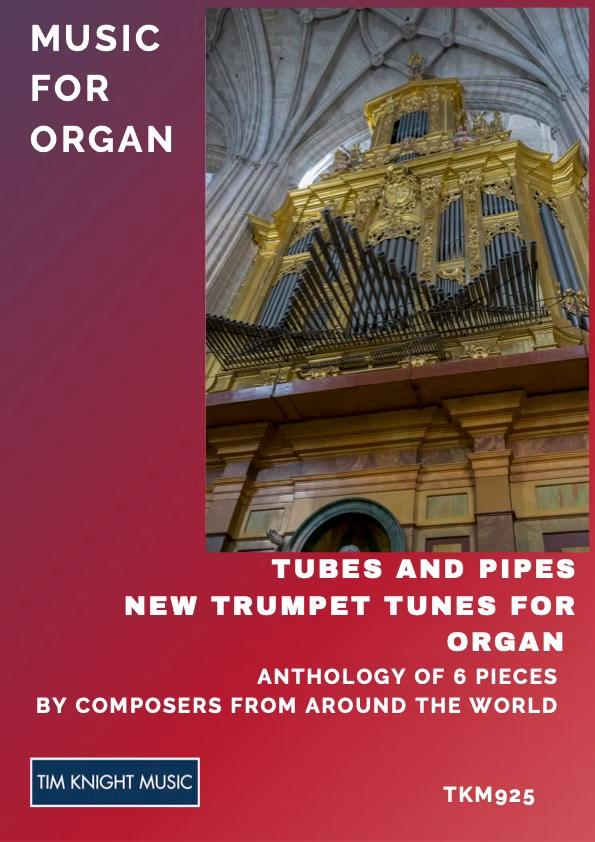
TUBES AND PIPES: NEW TRUMPET TUNES FOR ORGAN [M]
Tim Knight Music TKM925 £14.95
This little anthology of six pieces, all featuring solo trumpet stops, opens with an immediately attractive Trumpet Tango by Phil Lehenbauer, which does exactly what its title says. Giles Taylor’s stately Processional and Derry Bertenshaw’s lively Syncopated Trumpets do not have fanfare figures in their solo lines and could work well with other combinations of stops on a two-manual instrument. David Lasky’s Trumpet Rondeau in C is an effective festive recessional. Leigh Harrison contributes a Majestic March with a grand and stately feel. Josh Ring’s Trumpet Tune on ‘Simple Gifts’ treats the tune freely and almost as a dance: a refreshing approach after some of the heavier pieces here.
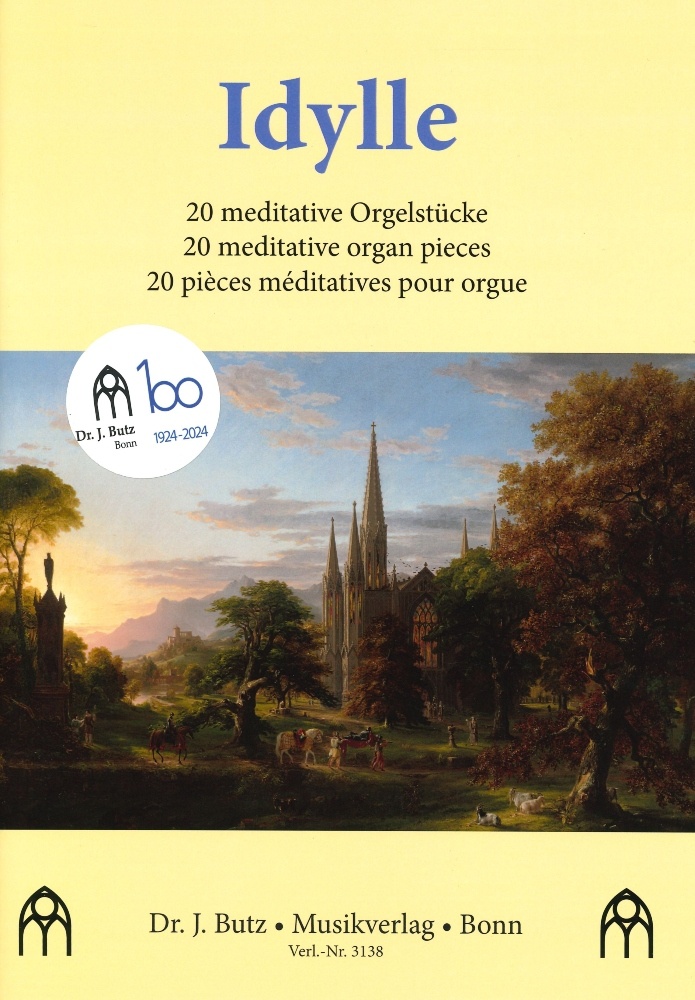
IDYLLS: 20 MEDITATIVE ORGAN PIECES [E/M]
ed. Hans-Peter Bähr
Butz-Verlag 3138 €20.00
Two of the pieces in this volume of new music commissioned by the publisher are titled Communion, making clear their intended use. Others include Idylls (Robert Jones and Bernard Wayne Sanders), Meditation (Lothar Graap, Hans-André Stamm and Margaretha Christina de Jong), Andante Religioso (Carsten Klomp) and Cantilena (Martin Setchell). Peter Planyavsky cannot resist calling his dreamy communion meditation Planys Angelicus. Wolfgang Reisinger combines a berceuse with a gentle waltz in Berceuse viennoise. The 20 different composers were given specific criteria: duration of three to five minutes (or longer if with optional cuts), moderate difficulty and an overall contemplative mood using preferably a neo-Romantic musical language. Two manuals are required for some of the pieces, but otherwise they are suitable for the smallest of instruments. There is infrequent indication of registration or dynamics, with players given freedom to provide their own. It is a useful collection for filling quiet liturgical moments without improvisation; there is considerable variety and invention in the 20 short pieces.
Duncan Watkins