Each of you reading this article will have your own list of favourite pieces of church music, in whatever style or form.
With the RSCM’s centenary approaching in 2027, this ‘10 Pieces’ project offers a way of charting changing tastes, styles and aesthetics in church music across the organization’s first hundred years.
The intention is to feature one piece from each decade. If you might personally have chosen something different, that does not really matter: the point is that together they create a narrative, and a list of music that everyone should know and have the opportunity to sing. The works have been intentionally selected to be approachable – not too large-scale, and without undue demands on singers (or organists!).
Each piece will be accompanied by an article exploring its context, the composer, and its place in the wider choral tradition. This edition of CMQ features the first work: Brewer in D, written in the RSCM’s founding year of 1927. The remaining nine pieces will be covered in groups of three across subsequent issues throughout the year.
There will also be a series of online lunchtime lectures, in which expert speakers will explore how to approach performing each piece. These practical ‘tips and tricks’ sessions are aimed particularly at conductors, but will also be valuable for singers who want to deepen their understanding of the music.
A dedicated features page on the RSCM Music Shop website will make it easy to obtain copies for singing, and we also plan to release a compiled set of the music in time for 2027. Rehearsal tracks will be available to support singers in preparing the repertoire, particularly where the music may be less familiar.
Moving into 2027, there will be an invitation to sing the pieces and to log when and where they are being used via a registration page on our website. Guidance on incorporating the music into worship will form a continuing thread within Sunday by Sunday throughout this period. At the same time, churches will be encouraged to use the project as a ‘Come and sing 10 iconic pieces of church music’ invitation – part of a wider narrative of growing the church music community and welcoming more people into this remarkable world. Practical advice on how best to run such events, along with support materials including publicity templates and press releases, will be made available later in the year.
The more mathematically minded readers may already have realized that an eleventh piece is required for the current decade. This will be added to the list as a bonus surprise in the March 2027 edition.
---------------------------------------------------------------------------------------------
A CENTURY IN SONG, NO. 1
HERBERT BREWER: EVENING SERVICE IN D MAJOR
JEREMY DIBBLE
Sometimes known as the ‘composers’ county’ (a sobriquet that included S.S. Wesley, Parry, Vaughan Williams, Howells, Gurney and Alexander Brent Smith), Gloucestershire was the home of Alfred Herbert Brewer (1865–1928) for the major part of his musical career. In 1885 he was due to take up the organistship at Bristol Cathedral after the dismissal of George Riseley by the dean and chapter. However, after Riseley won his case before the chancellor of the diocese and was reinstated, Brewer was forced to give up the appointment and had to wait just over a decade before his succeeding Charles Lee Williams, who resigned the position of organist and director of music at Gloucester Cathedral at the end of 1896.
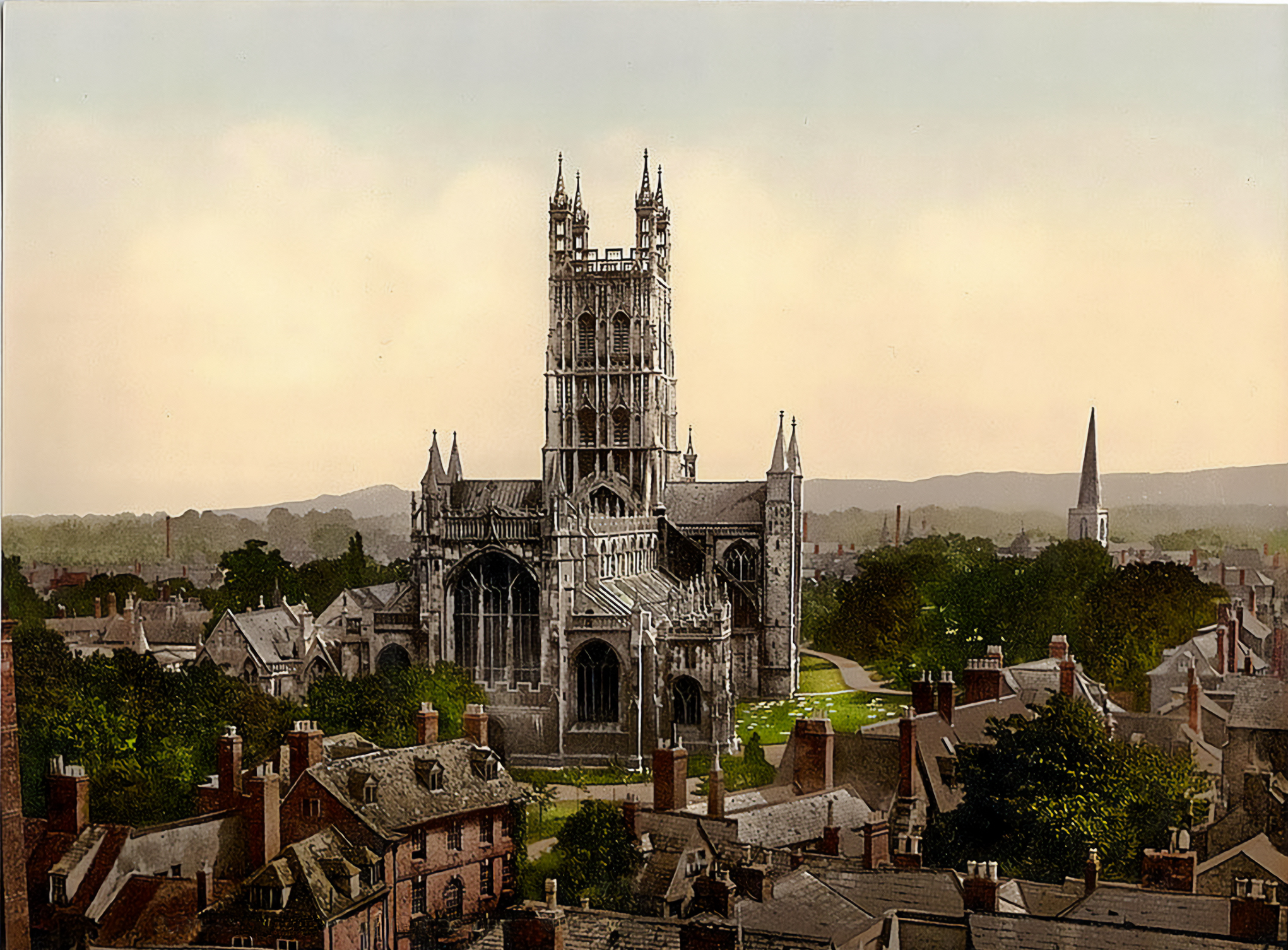
Gloucester Cathedral pictured in the late 19th century.
A former chorister of the cathedral (1877–80) and organ pupil of Charles Harford Lloyd, Brewer records in his autobiographical Memories of Choirs and Cloisters, published posthumously in 1931, that he rubbed shoulders with Parry as a young organist, deputizing from time to time at Highnam Church, the estate church of Highnam Court just outside the city. After a short period in 1883 as the holder of the first organ scholarship at the Royal College of Music, he spent several years in Oxford, where his degree work was supplemented by an organ scholarship at Exeter College. Time at St Michael’s, Coventry (later Coventry Cathedral) gave momentum to his career in choral music. Although he might have been tempted to succeed W.T. Best as organist of Liverpool Town Hall, it was his home city of Gloucester, its church music, and the tradition of the Three Choirs that ultimately drew him back.
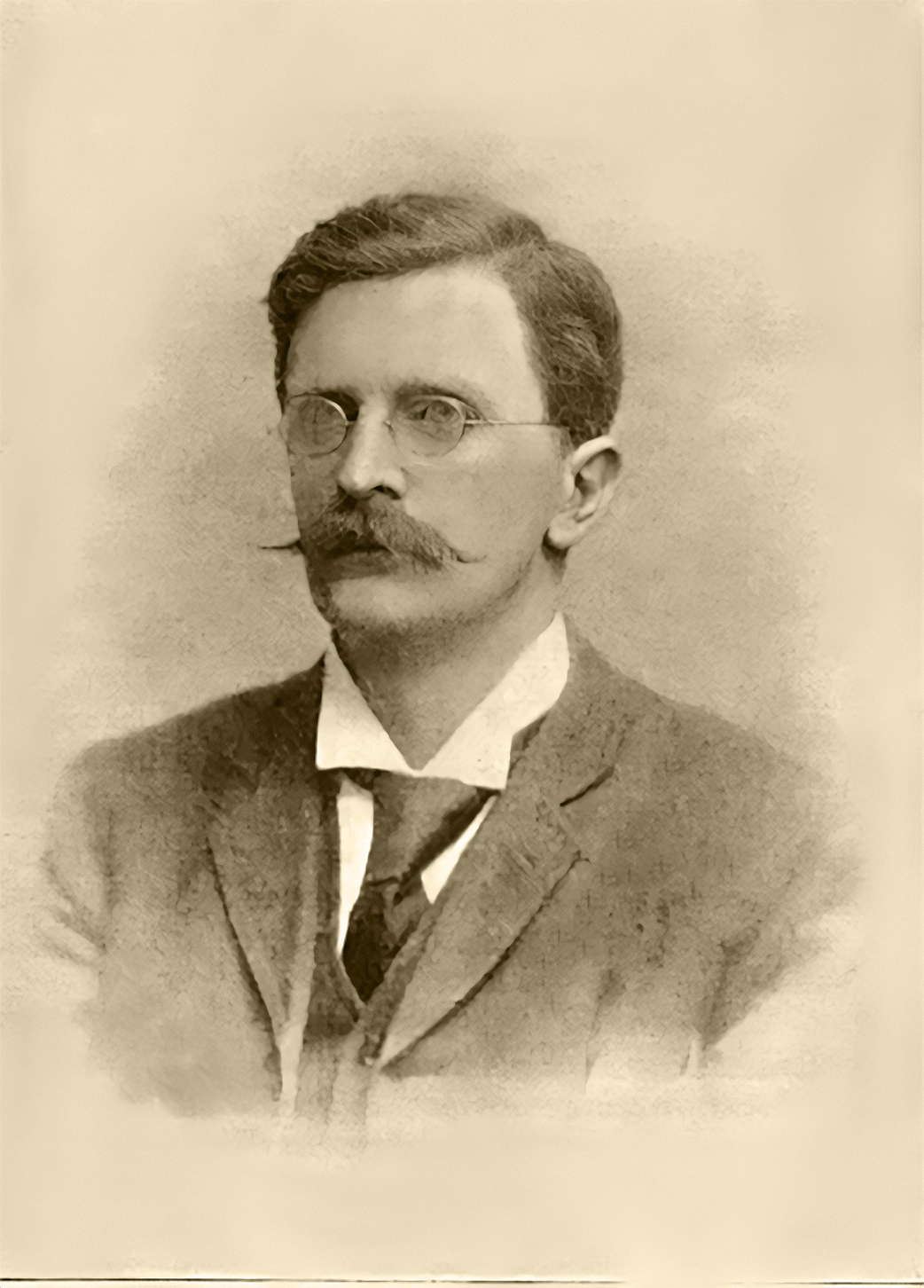
Alfred Herbert Brewer, 'The Musical Times', September 1898.
At Gloucester, much of Brewer’s effort was directed towards heightening the city’s profile as the most international of the three cathedral choir centres. This ambition began in earnest with his encouragement of the young Elgar and the even younger Samuel Coleridge-Taylor, whose Ballade in A minor caused a sensation at the 1898 festival. His appetite for new British music is further reflected in his promotion of Vaughan Williams, Holst, Bliss, Goossens, William H. Bell, and H. Walford Davies, alongside the continental voices of Richard Strauss (German), Aleksandr Scriabin (Russian) and Jean Sibelius (Finnish). Brewer’s own compositional energies were also manifested at the Gloucester Three Choirs with his cantatas Emmaus (orchestrated by Elgar) and The Holy Innocents, first performed in 1901 and 1904 respectively. The composition of church music, however, was largely a secondary activity. Three settings of the evening canticles were written in 1893 (in A), 1896 (in F) and 1904 (in E flat) for the Anglican liturgy. The Evening Service in D, by contrast, was commissioned at a much later date for the Three Choirs Festival in 1927.
In emulation of the practice of the annual Festival of the Sons of the Clergy at St Paul’s Cathedral, it had become a tradition at the Three Choirs Festival, well before the First World War, to include an orchestra as part of the ceremony of the opening service. Stanford’s Evening Service in G, for example, had been scored for such an occasion, and was used at least twice during the composer’s lifetime. Brewer’s Evening Service in D major began life in this form, as an orchestral and choral conception, an idiom in which he would have felt entirely comfortable, given his affinity for the orchestral writing and his numerous transcriptions of orchestral music for organ. The service was first sung at Hereford on 4 September 1927 when, accompanied by the London Symphony Orchestra, it was conducted by Brewer himself (who otherwise took his customary place in the organ loft). It stood alongside ‘The spirit of the Lord is upon me’ from Elgar’s The Apostles, which the composer conducted, and the orchestral voluntaries included the Andante from Brahms’s Fourth Symphony, Wagner’s Huldigungsmarsch and Beethoven’s Coriolan Overture.
Despite its later date, Brewer’s service looks back unapologetically to the muscular diatonic styles of Parry and Elgar, and to the sturdy settings of Noble, Blair, Stanford, Wood, Ireland and Harwood, a tradition straddling the late Victorian and Edwardian eras. This inheritance is powerfully embodied in the first choral idea of the Magnificat, and more lyrically in a secondary statement (‘And his mercy is on them’), announced more wistfully by the sopranos. Brewer barely leaves D major throughout the entire structure, relying purely on a juxtaposition of the two main thematic ideas, and the ‘Gloria’ follows a commonly practised procedure of restating the opening material as a reaffirmation of the Magnificat’s opening noble sentiment.
The Nunc Dimittis appropriately begins in prayerful mood, a cappella, its sense of awe communicated by Brewer’s unexpected harmonic progression in first verse to flat VII (‘depart in peace’). From this hushed mystery, the through-composed form steadily grows in volume and stature until, in the third verse (‘To be a light to lighten the Gentiles’), the robust ‘nobilmente’ spirit of his Edwardian forbears comes to the fore and is continued in the stirring ‘Gloria’.
In 1927 the HMV Gramophone Company was finally allowed to record at the Three Choirs Festival, despite earlier misgivings on the part of dean and chapter. Thanks to the persistent efforts of Elgar and the Hereford director of the festival, Percy Hull, agreement was reached. Although many of the 25 sides of 78s made by HMV were destroyed, parts of the opening service survived, including the Nunc Dimittis of Brewer’s service. Through modern remastering of this near-century-old recording, it remains possible to appreciate the dramatic swell and ceremonial splendour of the music in its original orchestral version.