

*Worth hearing
**Recommended
***Essential listening
CHORAL CDs
HOLY WEEK AND EASTER
*
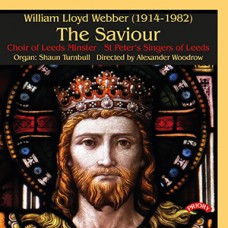
WILLIAM LLOYD WEBBER: THE SAVIOUR
Choir of Leeds Minster / St Peter’s Singers of Leeds / Shaun Turnbull (organ) / Alexander Woodrow ♦ Priory PRCD1252
The Saviour was written in 1961 and clearly tries to emulate Stainer’s The Crucifixion, if with a rich, late-Romantic harmonic language; each of its three parts ends with a congregational hymn. The music is more ambitious than Stainer; whether it is more successful may depend on your attitude to the extensive amount of recitative. Also on the disc are three anthems, and Six Interludes based on Passion Hymns for organ and previously unrecorded, played by Alexander Woodrow. The liner notes give valuable information about the composer.
***
BRUCKNER & GESUALDO: MOTETS
Monteverdi Choir / Jonathan Sells ♦ Soli Deo Gloria SDG736
Issued on the Monteverdi Choir’s own label, this is the first recording of the choir under its new director, released last year to mark the choir’s 60th birthday and Bruckner’s 200th. The choir clearly remains on top form under its new leadership. Gesualdo and Bruckner may not seem an obvious pairing, but it is a satisfying combination, especially when Bruckner is sung on this live recording with as much tormented passion as you might anticipate with Gesualdo. The disc also includes Lotti’s Crucifixus a 8 and Palestrina’s Stabat Mater as arranged by Wagner in 1848 – the conceit being to imagine that the recording is of a 19th-century ‘historical concert’.
**
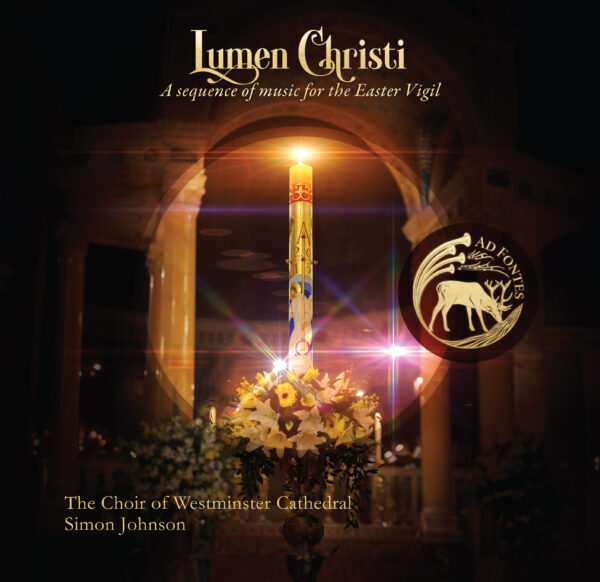
LUMEN CHRISTI: A SEQUENCE OF MUSIC FOR THE EASTER VIGIL
Choir of Westminster Cathedral / Peter Stevens (organ) / Simon Johnson ♦ Ad Fontes AF012
This sequence of plainsong and polyphony, the first CD recorded under Simon Johnson, the choir’s current director, takes us through the Easter Vigil on a journey from darkness to light. The pieces are arranged to give a sense of a live occasion; the liner notes explain the service and the music comprehensively.
There is polyphony by Palestrina, de Lassus, Victoria and Monteverdi, plus L’Héritier’s Surrexit pastor bonus – new to me, but a colourful work by a pupil of Josquin). Recent compositions include Matthew Martin’s baptismal Vidi aquam, Andrew Reid’s Exodus Canticle (concluding with what Jeremy Summerly describes as ‘a paschal bonfire of prominent reeds’), and O filii et filiae arranged by Martin Baker, a former Westminster Cathedral musician. Peter Stevens provides a spectacular conclusion with his performance of Langlais’s Incantation pour un jour saint.
Judith Markwith
PENTECOST & CORPUS CHRISTI
**
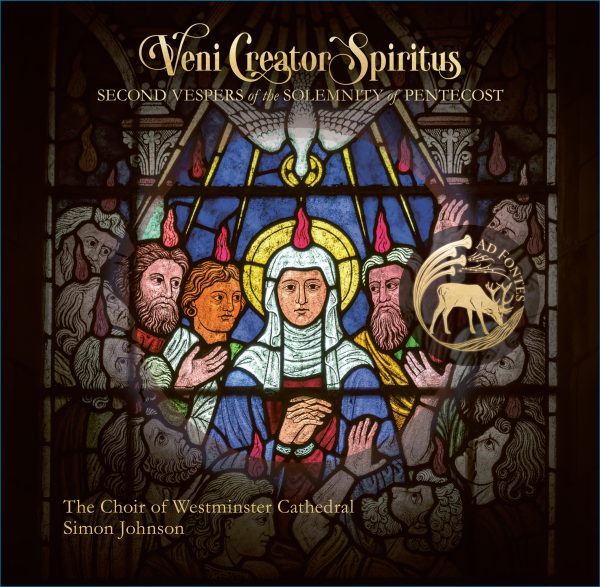
VENI CREATOR SPIRITUS: SECOND VESPERS OF THE SOLEMNITY OF PENTECOST
Choir of Westminster Cathedral / Peter Stevens (organ) / Simon Johnson ♦ Ad Fontes AF015
We hear the Latin psalms and chants appointed for vespers at the end of the Sunday of Pentecost, along with Palestrina’s six-part Dum complerentur, Tallis’s seven-part Loquebantur variis linguis and Victoria’s Magnificat primi toni. Bringing us into the present century, Gabriel Jackson’s Factus est repente was commissioned for the choir in 2014 and juxtaposes passages of spiritual warmth and beauty with depictions of the confusion of voices and languages described in the Pentecost story. The final Marian antiphon is Herbert Howells’s double-choir setting of Regina caeli, written for Westminster Cathedral in 1915. As a recessional, Peter Stevens summons up the wind and flame of Pentecost in Duruflé’s Choral varié sur le thème du ‘Veni Creator’.
**
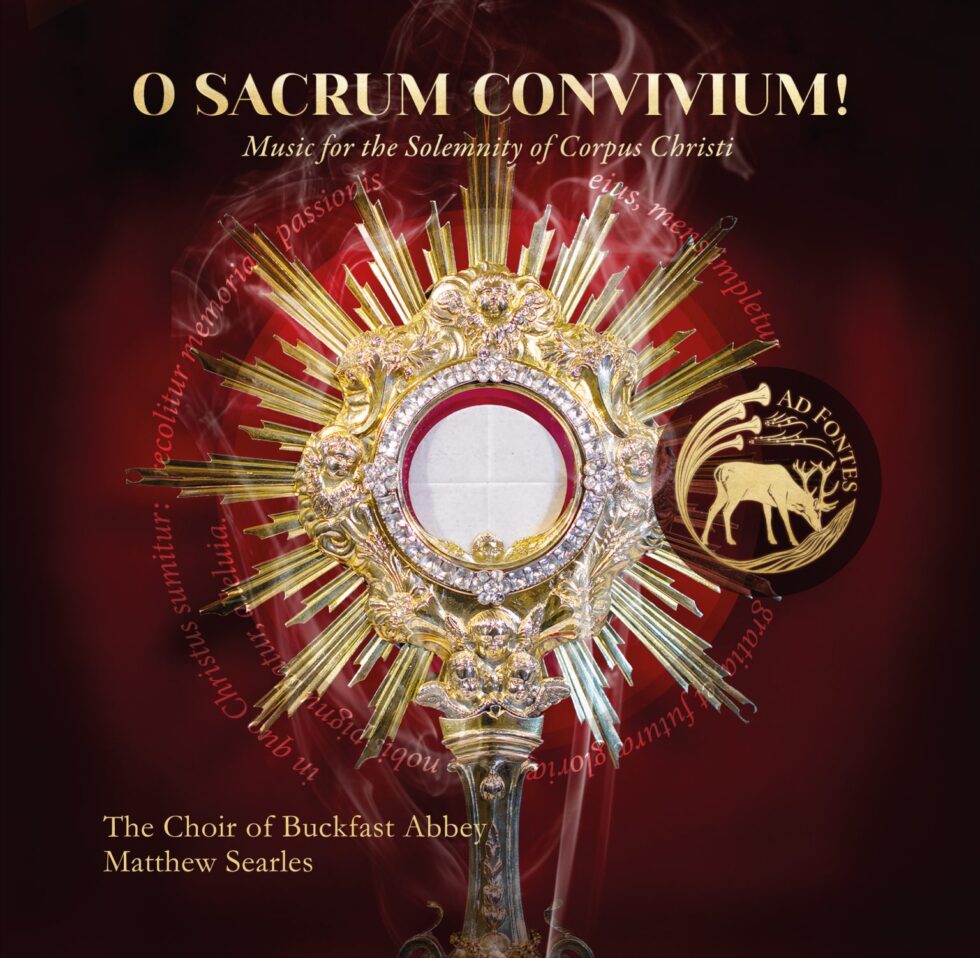
O SACRUM CONVIVIUM! MUSIC FOR THE SOLEMNITY OF CORPUS CHRISTI
Choir of Buckfast Abbey / Charles Maxtone-Smith (organ) / Matthew Searles ♦ Ad Fontes AF014
Buckfast Abbey celebrates Corpus Christi with full solemnity, including a procession and benediction. This CD has 75 minutes of music that might be heard during Mass and vespers on that day, with chants, hymns, motets, psalms and, not least, a Mass setting. This setting is Missa O sacrum convivium! by Martin Baker, commissioned for the Buckfast Abbey choir. It is based on two pieces of plainchant, including the O sacrum convivium! chant itself, with melodies that are developed and transformed in this major work for choir and organ. Motets by Guerrero, Palestrina and (for Benediction) by Fernand Laloux and an organ suite In festo Corporis Christi by Anton Heiller are included along with a copious amount of chant. The hymns include ‘Sweet sacrament divine’, which concludes the disc with an unexpected reharmonization by Matthew Searles that banishes any feeling of sentimentality.
Judith Markwith
OTHER CHORAL CDs
***
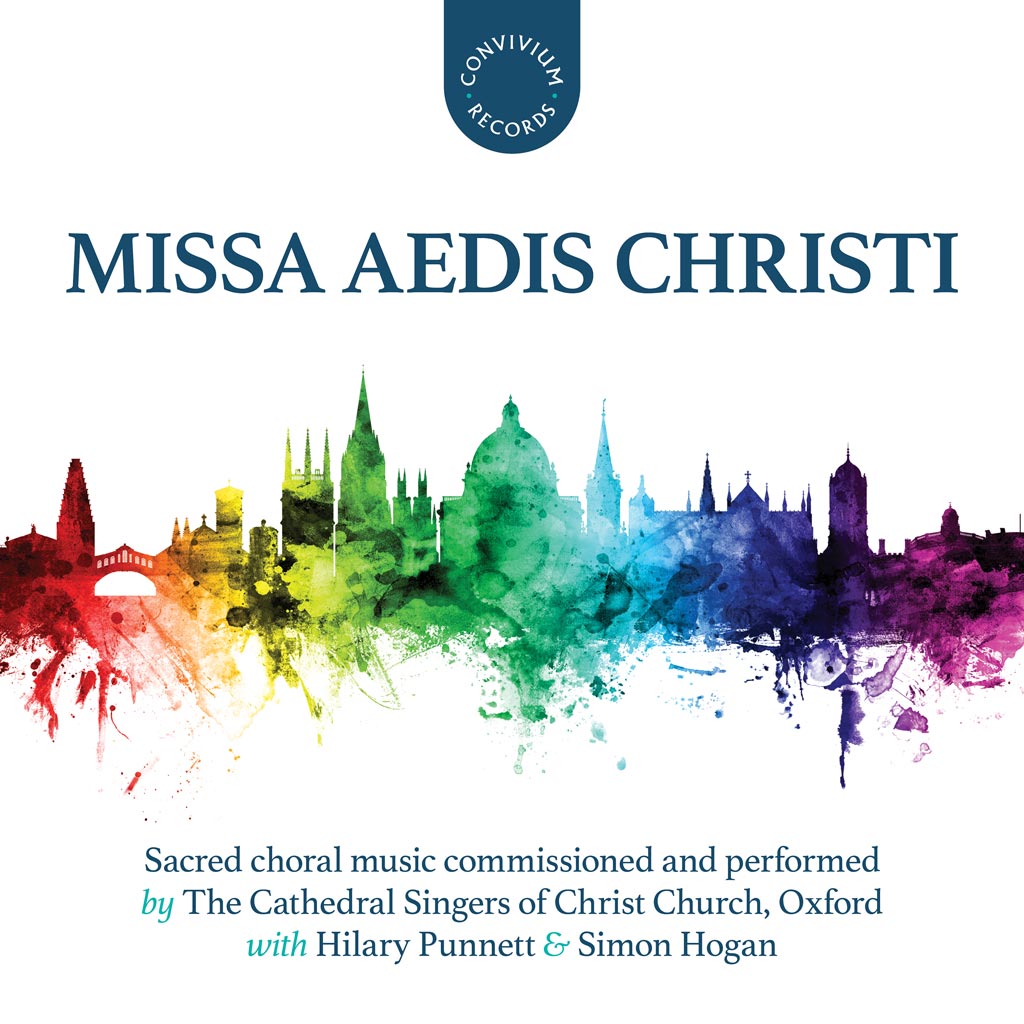
MISSA AEDIS CHRISTI
Cathedral Singers of Christ Church, Oxford / Simon Hogan (organ) / Hilary Punnett ♦ Convivium Records CR107
The Cathedral Singers, Christ Church Cathedral’s mixed-voice voluntary choir, is an accomplished ensemble and, under its director, Hilary Punnett, an adventurous one. In a carefully curated sequence commissioned for its New Music Project 2020, Grayston Ives’s Missa Aedis Christi (‘Christ Church Mass’) takes pride of place. Ancient and modern combine, with quasi-plainchant vocal melodies over sustained, almost Romantic organ harmonies. In contrast is the rhythmic drive of much of the Gloria and the starkly austere start to the Agnus Dei.
Four commissioned anthems include Bertie Baigent’s Rise heart and Alison Willis’s Regina Caeli, both for Easter, and Ben Rowarth’s A New Year Carol, which combines the warmth of the Levy-Dew text used by Britten with Hans Christian Andersen’s story of the freezing little match girl. Sarah Rimkus sets verses from Psalm 139, Genesis and Exodus in The God who sees me, the title being the words of Hagar when she became the first person in the Bible to name God.
David Bednall’s A hymn of George Bell, James Potter’s Alternative Canticles (setting Cantate Domino and Deus Misereatur) and two organ pieces, ‘Lauda Sion’ from Anthony Gray’s An Aquinian Sequence and Cheryl Frances-Hoad’s Toccata, written for Simon Hogan, complete a CD that celebrates the results of this imaginative project.
Julian Elloway
**
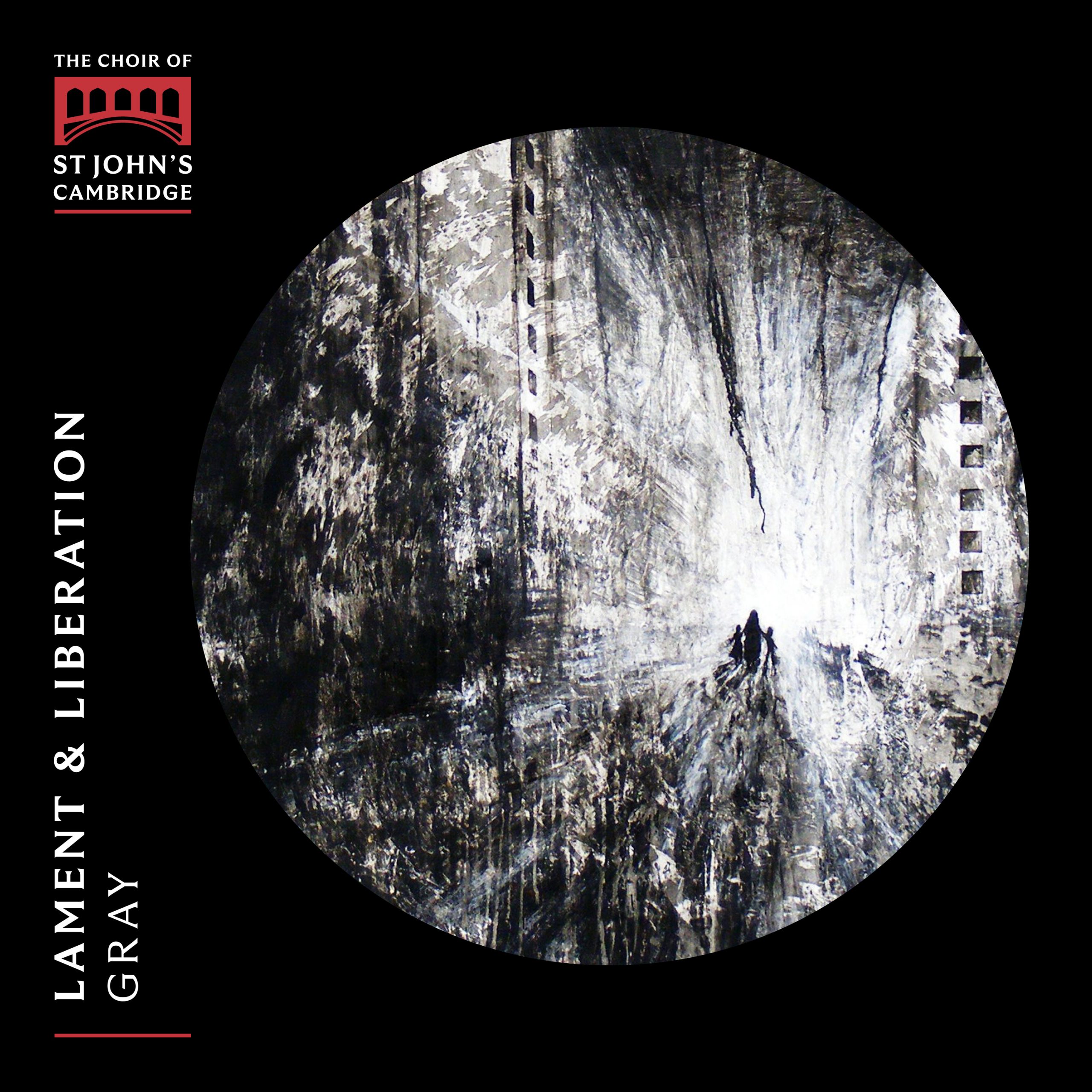
LAMENT AND LIBERATION
Choir of St John’s College, Cambridge / Alexander Robson (organ) / Christopher Gray ♦ Signum Classics SIGCD893
James MacMillan’s Cantos Sagrados has become a classic of contemporary choral repertoire, and the performance here of this difficult work is superb. Jeremy Dibble’s CD notes describe Joanna Marsh’s triptych Echoes in Time as having been commissioned as a foil to the MacMillan – it is certainly gentler and more devotional, the first commission by Christopher Gray for St John’s. The three movements, for unaccompanied double choir, are all performable separately: ‘The hidden light’ for Advent, ‘Refugee’ for Epiphany, and ‘Still to dust’ in Lent. Also new is Helena Paish’s The Annunciation with complex harmonies and three upper-voice soloists as well as the choir.
Other pieces include ‘Deus, Deus meus’, a motet taken from Roxanna Panufnik’s Westminster Mass, and Dobrinka Tabakova’s Turn our captivity, O Lord, written in 2023 and ending with the reassurance that ‘they that sow in tears shall reap in joy’. Specially written for this recording is an organ work, Ecce ego loannes omnium Sanctorum (‘Behold, I am John of all the Saints’), by Martin Baker. It depicts St John’s Revelation vision of the annihilation of the world at the opening of the seventh seal. The music builds up three times, each more terrifying, culminating with the Trompeta Real of the Mander organ: exhilarating in Alexander Robson’s performance.
**
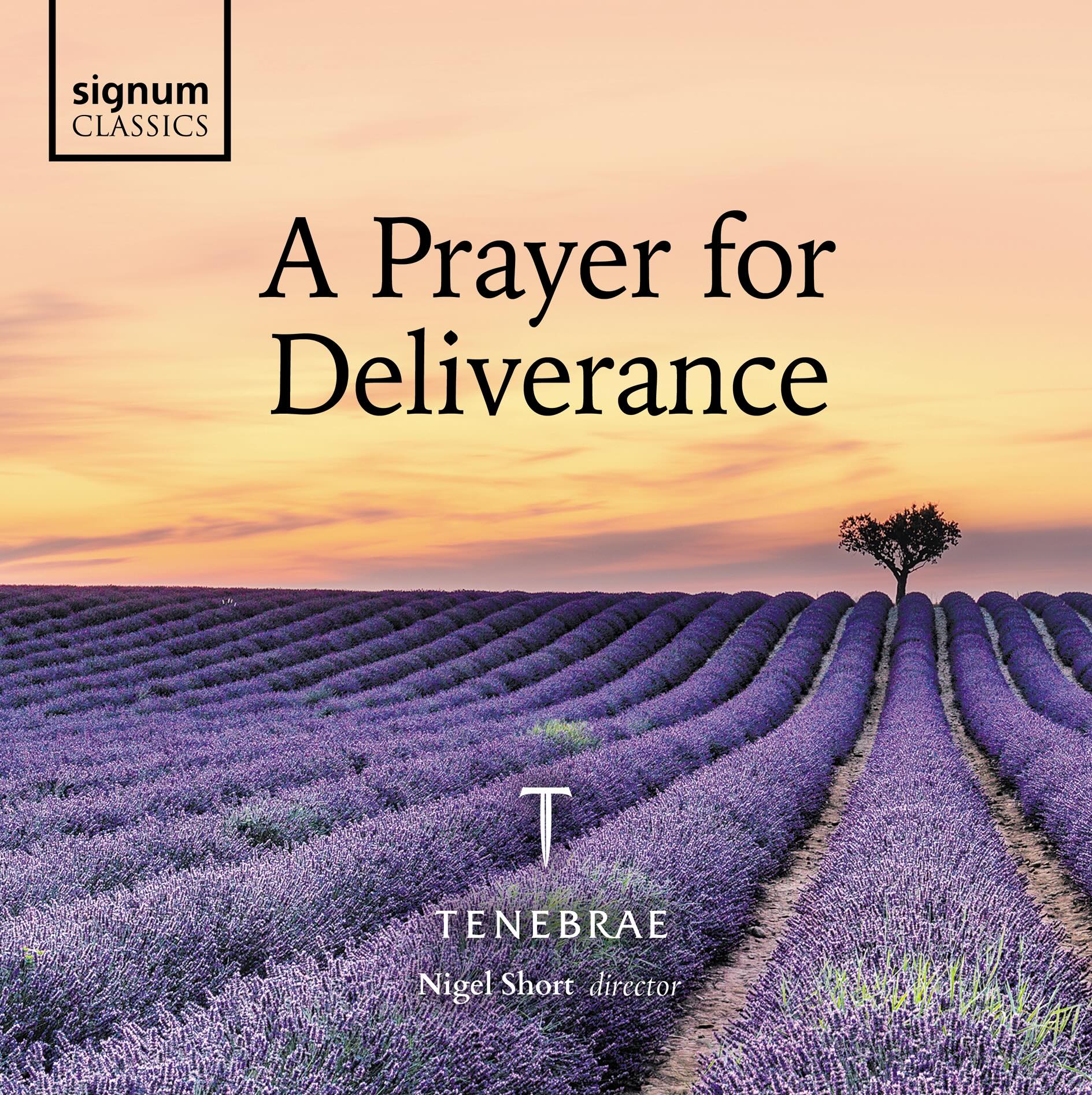
A PRAYER FOR DELIVERANCE
Tenebrae / Nigel Short ♦ Signum Classics SIGCD880
In this CD of two halves, the centrepiece of the first part is A Prayer for Deliverance, a setting of Psalm 13 by American composer Joel Thompson. Written as an emotional response to the Covid pandemic and to Black Lives Matter, it contrasts with the soulful resignation of Howells’s Requiem that opens the second part.
These two substantial works are surrounded by a collection of short pieces; Tavener’s Song for Athene is the longest. Well-known favourites by Pearsall and Sullivan are joined by living composers – Joanna Marsh, Cecilia McDowall, Francis Pott and Caroline Shaw – with pieces that, in Nigel Short’s words, also ‘explore themes of deliverance, forgiveness, comfort, and solace in times of particular stress and sorrow’. The resonance of Ampleforth Abbey’s acoustic combines with the sound of this fine group of singers to provide a poignant and satisfying recording.
Judith Markwith
ORGAN CDs
**
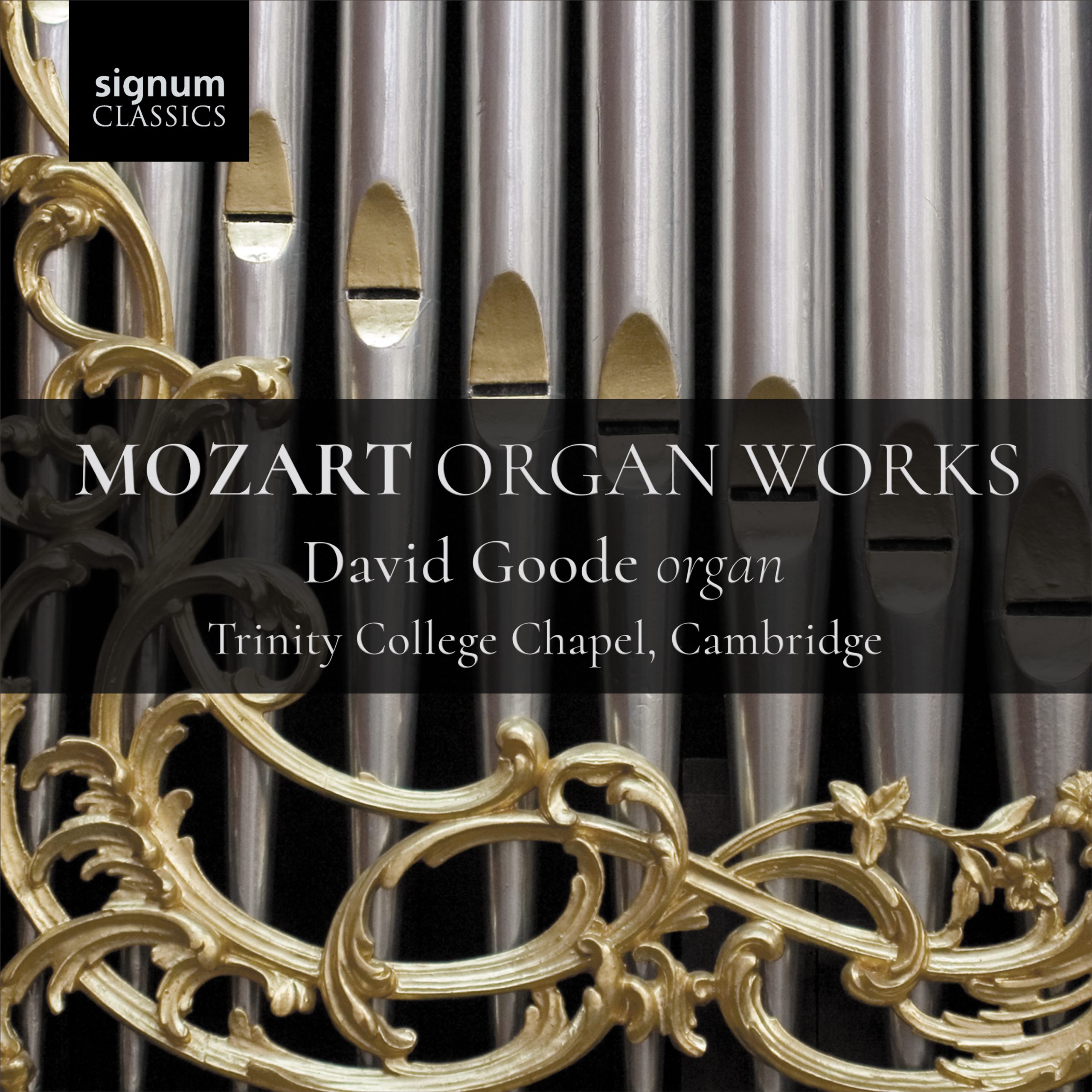
MOZART ORGAN WORKS
David Goode plays the Metzler organ of Trinity College, Cambridge ♦ Signum Classics SIGCD899
Of Mozart’s two F minor Fantasias, K594 and K608, David Goode describes the second as Mozart’s greatest organ work. They are played here along with the F major Andante (K616), using the ‘full-size’ Trinity College organ, without any nod to mechanical clock origins. As well as these three, Goode gives us a further 16 tracks of Mozart’s music associated with or appropriate for the organ (such as the originally two-piano K546 Fugue in C minor), a total of almost an hour and a quarter of playing time.
David Goode’s notes cover Mozart’s relationship with the organ (it was Mozart who described it as the ‘King of instruments’), Mozart and counterpoint, Mozart and clocks, and an introduction to each piece including the reasons behind his choice of registrations. Goode clearly loves the music and responds to it with fiery energy and grandeur, or with intimacy and gentleness as appropriate, such as in the K356 Adagio for glass harmonica.
Duncan Watkins
BOOKS
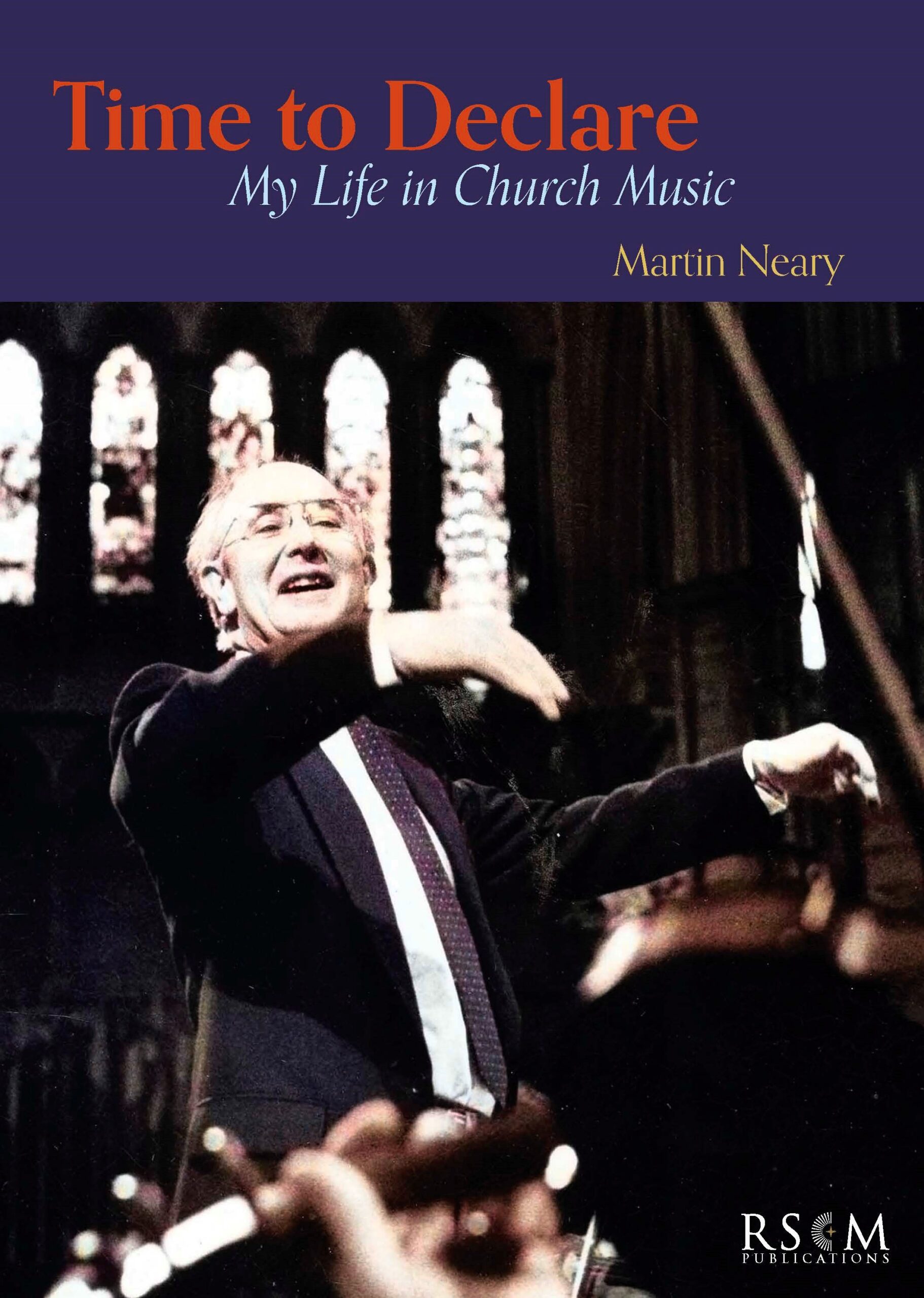
TIME TO DECLARE: MY LIFE IN CHURCH MUSIC
Martin Neary
RSCM Press
254pp. HB 978-0-85402-358-5 £25.00
Martin Neary’s career from his appointment to the Children of the Chapel Royal at the age of eight, through posts at St Margaret, Westminster, Winchester Cathedral and Westminster Abbey is widely known. Less so, perhaps, his intimacy with the great and good in the musical and broadcasting world and, considering the highly elevated social, political and ecclesiastical circles that Neary moved in during his career, it is no surprise that there are numerous anecdotes and stories contained in this book that will be new to most readers. I especially enjoyed the reminiscences about Prime Minister Ted Heath and Neary’s musical visits to 10 Downing Street.
His personal discovery that he knew nothing about training boys’ voices and received no voice training himself while a chorister at the Chapel Royal, led to his engagement of a voice coach at St Margaret, Westminster in 1966, possibly one of the earliest such appointments of a position now regarded as de rigueur.
His oversight of Princess Diana’s funeral is an episode that will interest many, but this was only one of over 200 special services that he was involved with at Westminster Abbey. His own account of his sad and devastating departure from the Abbey warrants a chapter, as one would expect, and also an appendix. The comfort given by his long-standing love of cricket is revealed both in text and in the title of the book.
The production standards of this book are A++; for RSCM members with their usual discount this is an outstanding purchase.
John Henderson

CHORAL MUSIC
E Easy
M Medium
D Difficult
EASTER SATB
AD CENAM AGNI PROVIDI [E]
Charlotte Baskerville
S solo, SATB
Encore Publications 020749 £2.85
Charlotte Baskerville has set the 6th-century Latin hymn ‘Ad cenam agni providi’ (found in English as ‘The Lamb’s high banquet we await’). It links the cross and the Easter liturgy and has parallels with the Exsultet, which it predates. The music opens with a solo line that looks as though it may be plainsong-influenced, but turns out to have more of a folksong feel, with some Vaughan Williams in its harmonies – and a gentleness that is temporarily set aside when Christ enchains the tyrant and regains Paradise. The motet would suit a late evening or early morning Easter service.
Julian Elloway
PSALM 150 [M]
Alan Bullard
SATB and organ
Colne Edition CE89 £2.95
Alan Bullard wrote his exciting setting of Psalm 150 (‘O praise God in his holiness’) for male-voice choir in 2003, but has revised it and prepared this SATB version. The composer writes that the psalm is particularly associated in the liturgical calendar with Easter. There is great energy in the writing that dances between simple and compound time, with the odd bar of 5/8 thrown in. Particularly effective with just voices and organ are the instrumental references to ‘the sound of the trumpet’, to ‘lute and harp’, ‘strings and pipe’, and ‘the loud cymbals’. The TTBB version (CE87) and now an SSAA scoring (CE88) are also available.
A BRIGHTER DAWN IS BREAKING [M]
Christopher Maxim
SATB and organ
Paraclete Press (Banks) PPM02408M £3.10
Christopher Maxim welcomes Easter with this joyful setting of Percy Dearmer’s hymn text. The outer sections have the feel of a (possibly medieval) dance, with 6/8 time signature and homophonic texture. The contrapuntal central verses will require work in rehearsal, but the vocal lines are rewarding and singable in themselves. After three unaccompanied verses, for which the organ provides introduction and links, the instrument joins in the fun for the concluding fourth verse.
Stephen Patterson
OTHER SATB
BROTHER SUN, SISTER MOON [M/D]
Sarah MacDonald
SATB
Encore Publications 020844 £2.35
PRAYER OF ST FRANCIS [E/M]
Joy Williams
SATB
Encore Publications 020852 £2.85
Sarah MacDonald has adapted St Francis’s Canticle of the Creatures to juxtapose Brother Sun and Sister Moon at the centre of this short anthem. They are joined by Mother Earth and all God’s creatures in a song of praise. Francis’s imagery is portrayed in wide-ranging textures and tingling added-note harmonies.
Joy Williams sets the prayer ‘Lord, make me an instrument of thy peace’, known as Prayer of St Francis. The original words may have been first published in France in 1912, but the sentiments reflect the peace-seeking spirit of Francis – as does the gentle harmony of the music. There is a particularly tender move from F to D major on ‘for thy mercy’s sake’, leading into the final petitions starting ‘O divine Master’.
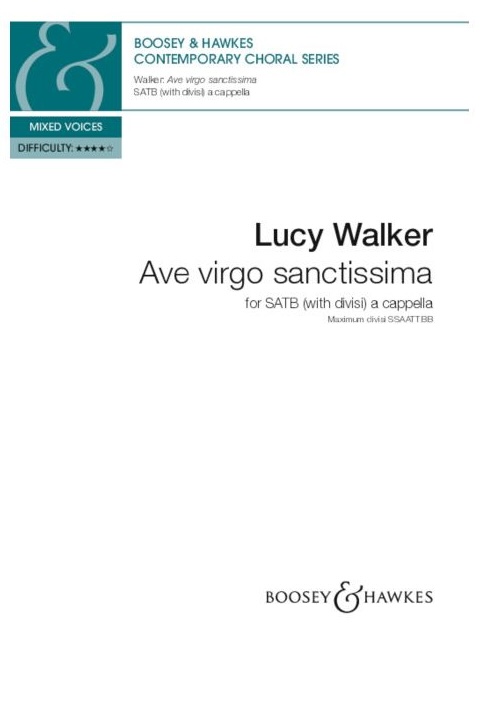
AVE VIRGO SANCTISSIMA [D]
Lucy Walker
SATB with divisions
Boosey & Hawkes 979-0-060-15181-1
This is a ravishingly beautiful setting of a text for the nativity of John the Baptist on 24 June, but commissioned by Robert Sharpe and the choir of York Minster for their Nine Lessons and Carols in December 2023 and suitable for singing throughout the year. The music starts simply but gradually expands to fill luxuriantly three octaves of sound. After a move from A flat to E flat major the music flows in eight parts, ‘soaring, expansive’ according to the score, and eventually floats heavenward with Amens.
James L. Montgomery
ORGAN MUSIC
E Easy
M Medium
D Difficult
LENT AND EASTER
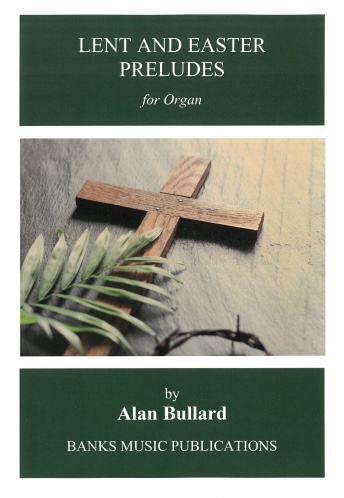
LENT AND EASTER PRELUDES [E–M]
Alan Bullard
Banks Music Publications 14163 £15.00
These short preludes are based on well-known hymn tunes; many organists would find them useful during Lent and Eastertide. With the five Lenten preludes there is typically an introduction based on fragments of the tune and then the melody is heard complete twice, with different textures above or below, and an intensification of the harmonies the second time. Passion Chorale and Horsley are exceptions with a single slow statement of the melody, mostly in the pedals or left hand. They are all easy, especially the pedal parts, and mostly quiet and suitable for playing just before a service, although Pange lingua has a sudden outburst shortly before the end.
The three Easter pieces are more extended and could also be suitable as final voluntaries. Noël nouvelet is a lively and rhythmically varied dance. O filii et filiae is in effect a long crescendo over 80 bars, ending triple forte. To finish, and rather more difficult, is a jubilant toccata on Easter Hymn.
ANTHOLOGIES
SORTIE SORTED: VOLUMES 1 AND 2 [mostly M]
ed. Ian Tracey and Keith Harrington
Church Organ World
COW-2024-18 and COW-2025-20 £25.00 each
Each volume contains 14 pieces by 14 different living composers, with Stephen Barber, Daniel Bishop, Alan Bullard, Simon Hancock, Keith Harrington, Christopher Maxim, Steven Maxson, Arthur Robson and Ian Tracey having pieces in both volumes. That list of names gives an indication of the mixture of established and lesser-known composers represented. However, there are interesting pieces by composers with just one entry. John Pennington’s Trumpet March looks and sounds like one of those 20th-century full-organ transcriptions of a Stanley trumpet voluntary. It would send a congregation out smiling but could also welcome a bride. The same could be said of Australian John Ross’s Trumpet March and, the other way round, although it is a volume of ‘Sorties’ we have a Bridal Entrada by David Stokes.
Christopher Maxim contributes a Toccata on ‘Aberystwyth’ to Volume 1, not as difficult as it looks, given its Allegretto tempo, and in Volume 2 a Carillon, also with considerable forward drive. Alan Bullard is represented by two ‘alla marcia’ postludes, on Praise my soul and Hyfrydol, the latter described as a tribute to RVW, although it has more variety than that composer’s own Hyfrydol prelude. Steven Maxson also chooses Hyfrydol, but for a toccata in Volume 2; in Volume 1 his Sortie des Pèlerins turns out to be a delightful toccata on Lourdes, with a ‘misterioso’ central section. Ian Tracey’s Festive Processional opens Volume 2 with a resonant Tuba fanfare. Keith Harrington’s Evening Postlude creates a meeting between Ellers and Nun danket. Everyone will have their favourites among these 28 pieces – the volumes are well worth exploring.
Duncan Watkins
VOLUNTARIES
TWO CHACONNES BWV 1178 & 1179 [M/D]
J.S. Bach ed. Peter Wollny
Breitkopf 9648 €16.90
In November 2025 these two newly attributed Bach works were announced to the world by the Bach-Archiv in Leipzig. They were discovered several decades ago within a manuscript of 32 organ works: what is new is the attribution by Peter Wollny to J.S. Bach. In his detailed preface (in German and English) Wollny firstly identifies the copyist of the manuscript as Salomon Günther John, who studied with Bach in Arnstadt, and who in 1705–7 was likely to have been copying Bach’s performance repertoire at that time. Secondly, Wollny identifies stylistic features found in the young Bach’s other Arnstadt compositions that suggest that these chaconnes were actually composed by him.
These pieces join other ‘Bach’ organ pieces that do not have definitive proof of authenticity, but whose attribution depends rather on the absence of any more likely alternative. Both pieces have seven-bar ostinatos, at least at first. BWV 1178, in D minor and with a central fugue, may be seen as a youthful study for the mighty C minor Passacaglia BWV 582. The G minor BWV 1179, which Wollny suggests may have been composed two years later, treats the ostinato theme with more harmonic and rhythmic variation. Both chaconnes are rewarding to learn and play.

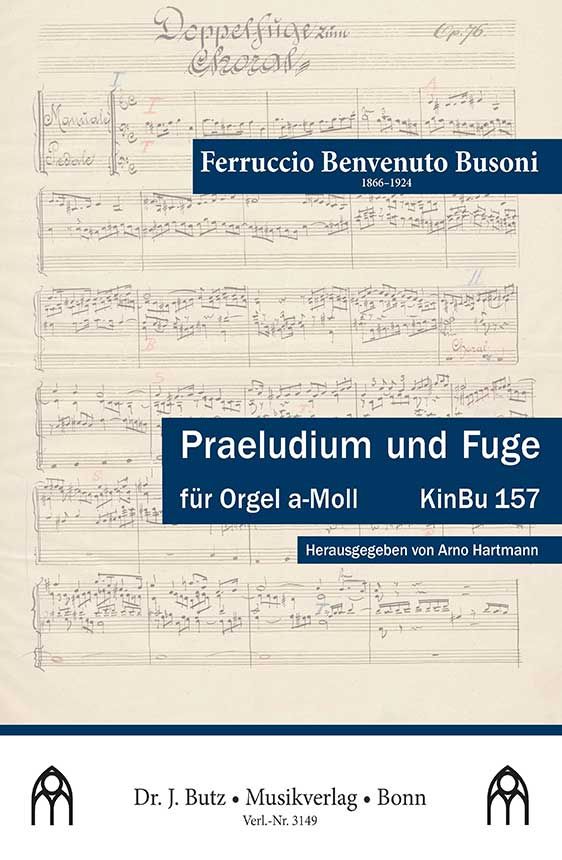
PRAELUDIUM UND FUGE BV157 (OP. 7) [D]
Ferruccio Busoni ed. Arno Hartmann
Butz-Verlag BU3149 €12.00
The prodigiously talented Ferruccio Busoni (1866–1924) started composing his ‘Praeludium (Basso ostinato)’ and ‘Doppelfuge zum Choral’ when he was 13 years old and completed it when he had turned 14. However, as a child virtuoso pianist he already knew major works by Bach and Liszt that were to be his role models throughout his life, and the inspiration behind this, his only large-scale organ composition.
The prelude is a passacaglia. The four-part fugue that follows lies entirely on the manuals, under which a chorale-like pedal line is added. Organists who know the standard Cranz edition will find that this new edition, based on the composer’s manuscript, corrects some obvious errors as well as having far fewer editorial additions to phrasing and dynamics.
 SONG WITHOUT WORDS [E]
Andrew Carter
Banks Music Publications 14145 £5.95
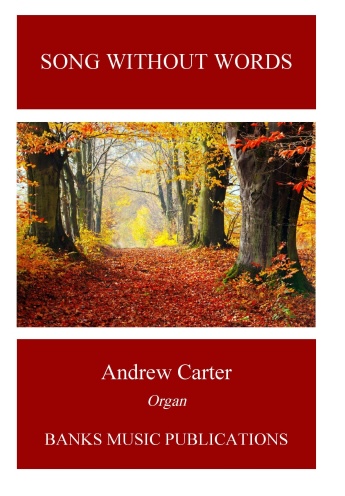
Many organists will have turned to a piece by Andrew Carter (1939–2026) to play after they heard the news of his death earlier this year, perhaps the mournful Aria of 1995. But here is a piece from 2022 that occupies a similar emotional sound world, but somehow seems at peace with itself as it moves between minor and major, especially in its nine-bar coda that comes to rest on a major chord. It is succinct and tightly constructed from its opening motif. The publisher’s warm, autumnal cover picture encapsulates it well.
Julian Elloway
SIX VOLUNTARIES FOR THE CHRISTIAN YEAR [M]
Charles W. Pearce ed. David Patrick
Fitzjohn Music Publications (Banks) FMP227 £10.00
John Henderson, in his invaluable Directory of Composers for Organ, describes Charles Pearce (1856–1928) as ‘one of the first 19th-century British composers to revive the genre of preludes and fantasias based on hymns’. The six voluntaries collected here were published separately between 1890 and 1930 and are not solely based on hymns. The volume opens with a Voluntary on Ouseley's anthem ‘How goodly are thy tents, O Jacob’ for the third Sunday after Easter. The anthem is short and sweet but receives an extended and surprisingly dramatic treatment from Pearce. For Passion Sunday there is a Voluntary on Sir John Goss’s anthem ‘O Saviour of the world’ with the interesting suggestion that the voluntary might be played as a prelude to the anthem. The other four voluntaries are hymn-based. ‘Full Organ Postludes’ on the Easter Hymn and on ‘Lo He comes in [sic] clouds descending’ are as loud and triumphant as one might expect.
The other two voluntaries each combine two hymn tunes, also fortissimo throughout. The first Sunday in Lent gives us the little-known St Mary combined with the even less known Windsor (by Christopher Tye). Epiphany more usefully has ‘As with gladness men of old’ coupled to ‘Earth has many a noble city’, although when the latter enters it is in pedal octaves, fortissimo, accented, plus ‘couple Solo Reeds to Pedal’ – heavy stuff!
TWO PIECES: COMMUNION IN B FLAT AND PRIÈRE [E]
Albert Renaud ed. David Patrick
Fitzjohn Music Publications (Banks) FMP227 £6.00
These two affecting late 19th-century pieces by a pupil of César Franck are among the many short works that Albert Renaud (1855–1924) wrote and published during his career as a Parisian organist. The Communion d’après Lefébure-Wely (to give its full title) was published in London by Novello and avoids the unexpected modulations of Lefébure-Wely’s own communions and offertoires. Prière, a triple-time ‘Adagio cantabile’, never rises above piano; it would form an attractive short piece for playing during communion.
Duncan Watkins